Flashing repair vs stainless relining
Flashing keeps water out at the roof line; a stainless liner carries exhaust. Different defects, $400-$1,500 against $1,500-$4,000, and why neither substitutes.
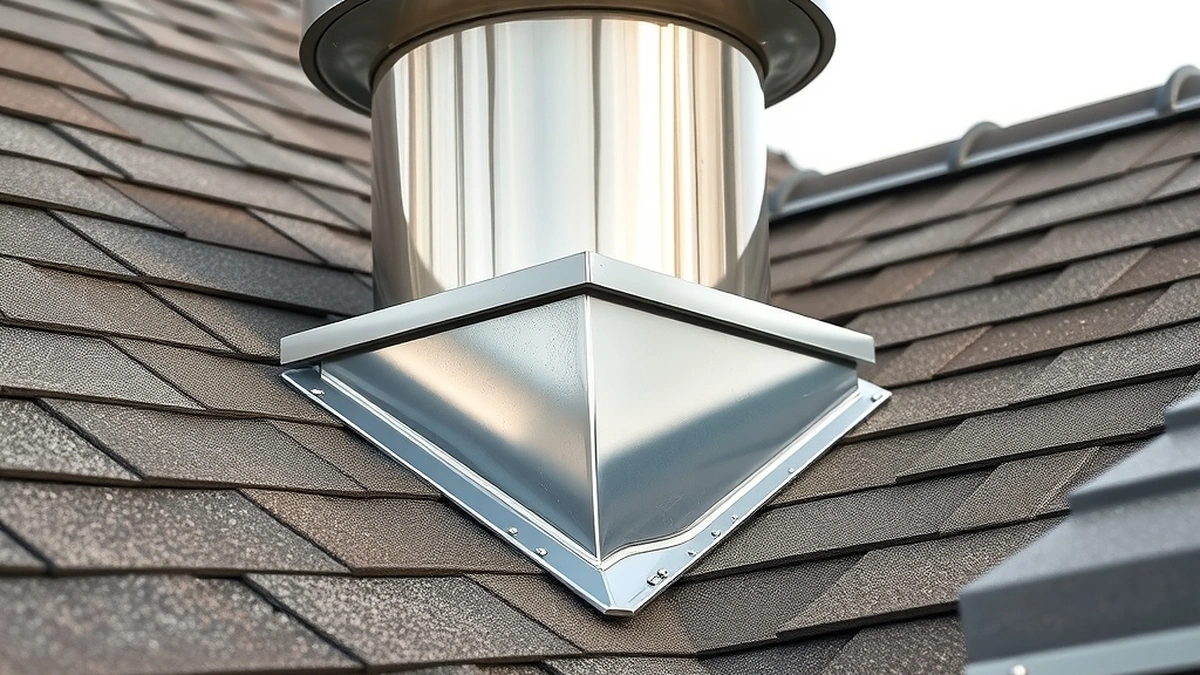
Flashing repair seals the roof-line joint for $400 to $1,500; stainless relining installs a new flue for $1,500 to $4,000. One is a water problem on the outside of the chimney, the other is a venting problem inside it.
- Flashing repair
- $400 - $1,500
- Stainless relining
- $1,500 - $4,000
- Crown repair
- $400 - $1,500
- Cap
- $150 - $600
- Inspection
- $150 - $800
Some links on this page are affiliate links.If you buy through them we may earn a commission at no extra cost to you. We do not accept payment for rankings. Read the full disclosure.
Flashing repair and stainless relining are often quoted in the same conversation and they have nothing in common except the chimney. Flashing keeps rain out at the roof line for $400 to $1,500. Relining replaces the flue that carries exhaust for $1,500 to $4,000. One is a water problem, the other a venting problem.
Two systems on one structure
A chimney is a masonry shell around a flue.
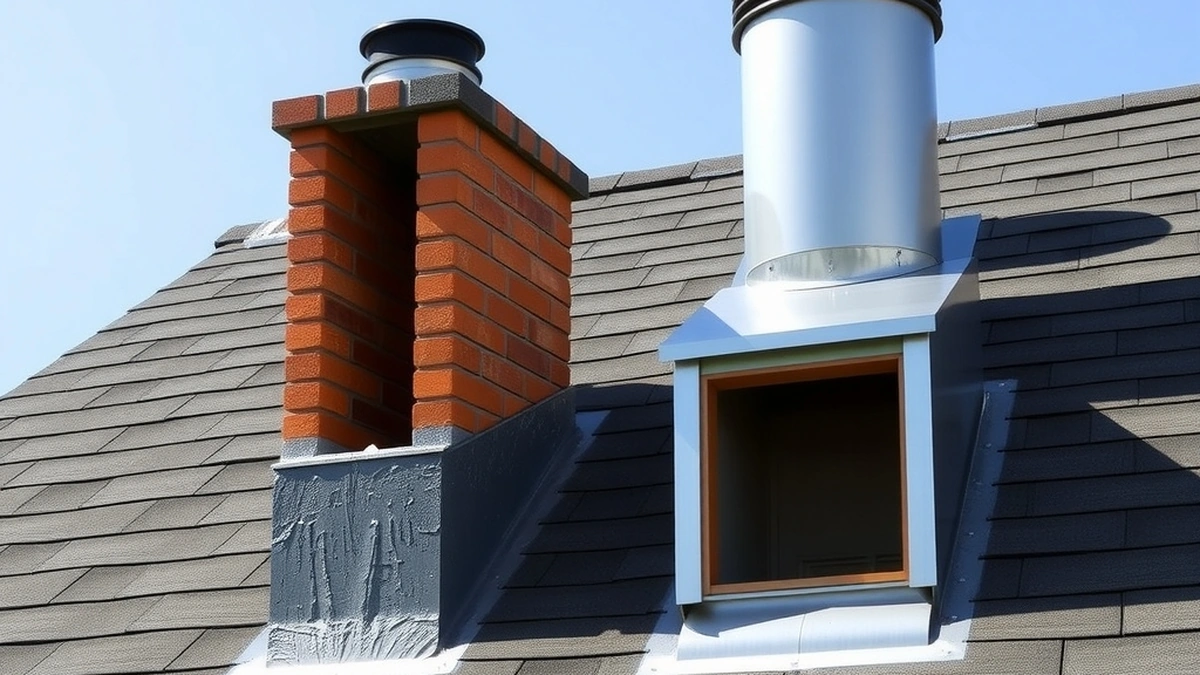
The shell has to shed water: the crown at the top, the flashing at the roof line, the brick face, and the cap over the flue opening.
The flue has to carry combustion gases safely: the liner, its joints, its sizing, and its connection to the appliance.
Flashing is part of the shell. Relining is part of the flue. A defect in one says nothing about the other.
Head to head
| Attribute | Flashing repair | Stainless relining |
|---|---|---|
| System | Masonry and roof joint | Flue |
| Problem solved | Water entry at the roof line | Failed or undersized liner |
| Cost | $400 - $1,500 | $1,500 - $4,000 |
| Trade | Roofer or mason | Chimney technician |
| Permit | Sometimes | Often |
| Life | 20-50 years by metal | 15-25 years |
| Fixes the other | No | No |
What each defect looks like
Flashing failure is a water story: staining on the chimney breast or ceiling, damp masonry below the roof line, a leak that appears in wind-driven rain, lifted or rusted metal.
Flue failure is a venting story: a cracked or spalled liner, gaps at the joints, a flue that is too large or too small for the appliance, or a liner that has separated from the masonry.
The first is often visible from the ground with binoculars. The second needs a camera inspection, which is why a professional inspection at $150 to $800 covers both.
A useful shorthand: if the damage is on the outside of the chimney, it is shell work. If the damage is inside the flue, it is venting work. The only place the two meet is the top of the stack, where a missing cap lets rain into a flue that may also be cracked.
Cost of doing both
A chimney with a leaking flashing and a failed liner:
Flashing at $400 to $1,500. Stainless liner at $1,500 to $4,000. Total: $1,900 to $5,500.
Add a crown repair at $400 to $1,500 and the total is $2,300 to $7,000.
That is still below the $5,000 to $15,000 partial rebuild band, which is what years of unchecked water and masonry damage produces.
Why they are often done together
Access. A crew already at the roof line can inspect the flashing, the crown, and the cap in one visit. A technician already working on the flue can assess the top of the stack.
Bundling does not merge the scopes, but it does share the cost of getting to them. That is why quotes for “chimney repair” often list several items, and why the itemisation matters.
Ask for each item with its unit: flashing by the job, liner by the linear foot and the appliance it serves, crown by the repair. Lumping them together makes it impossible to compare two quotes or to check whether the liner was sized for the appliance at all.
Where the trades divide
This is where homeowners get caught.
A roofer or mason can repair flashing, rebuild a crown, repoint joints, and reset a cap.
A roofer or mason should not be altering flue sizing, installing or modifying a liner, or changing an appliance connection.
Those decisions depend on the appliance’s listed venting requirements and local code. They belong to a qualified chimney technician. If a roofer offers to “line the flue while we are up there”, ask who is certifying it and whether a permit is being pulled.
Diagnosing which one you have
- Note when the leak appears: any rain, or only wind-driven.
- Look for interior staining near the chimney breast.
- Check the masonry below the roof line for damp.
- Look at the flue opening from below for a missing cap or visible damage.
- Book an inspection that covers both the shell and the flue.
Wind-driven only points to flashing. Any heavy rain points to the crown or the brick face. A damp flue with no wall staining points to the cap.
What neither repair does.
Flashing repair does not fix a flue, and relining does not stop water at the roof line.
Neither repairs spalled brick, which is repointing work at $400 to $1,500. Neither corrects a structural lean, which needs an engineer.
And neither is a substitute for the other when both defects exist, which is common on chimneys over thirty years old.
That combination is worth pricing as one job with two scopes rather than two separate projects. The access is shared, the inspection is shared, and a single written report covering both makes it much harder for either trade to leave a defect unmentioned.
Choosing when the budget is limited, and the honest limit
A compromised flue is a safety issue. The appliance should be taken out of service until a qualified technician has assessed it, which makes that the first spend.
Water at the flashing is a structural issue that worsens each year but rarely fails suddenly. It can usually be scheduled.
In practice, most owners do both in one season to share access. If the flashing is repaired first, book the liner assessment for the same visit so the technician can see the top of the stack while the scaffolding or ladder is in place. Our chimney repair cost page sets out the full menu, flashing repair cost covers the roof line, and stainless relining cost covers the flue.
Frequently asked questions
Is flashing repair the same as relining?
No. Flashing seals the joint between the chimney and the roof against rain. Relining installs a new flue liner to carry combustion gases. They address different systems.
Can relining stop a chimney leak?
Only if the leak is inside the flue, such as rain entering an uncapped chimney. A leak at the roof line is a flashing problem, and a liner does nothing for it.
Can flashing repair fix a bad flue?
No. Flashing is exterior metalwork. A cracked or undersized flue needs a liner, and that work belongs with a qualified chimney technician.
Which is more urgent?
A compromised flue is a safety issue, so the appliance should be assessed before use. Water at the flashing damages the structure over years but rarely fails suddenly.
How much do both cost together?
Flashing at $400 to $1,500 plus a stainless liner at $1,500 to $4,000 is $1,900 to $5,500. Adding a crown at $400 to $1,500 brings it to $2,300 to $7,000.
Do I need a permit for relining?
Often yes, because it is a venting system change. Flashing work may also require one depending on the jurisdiction. Confirm in writing who is pulling it.
Sources
Some links are affiliate links.If you buy through them we may earn a commission at no extra cost to you. We do not accept payment for rankings. Read the full disclosure.