Cast-in-place liner vs stainless relining: which fits
Cast-in-place versus stainless chimney relining compared on cost per foot, bore size, sealing, install time, and the flue conditions that decide between them.
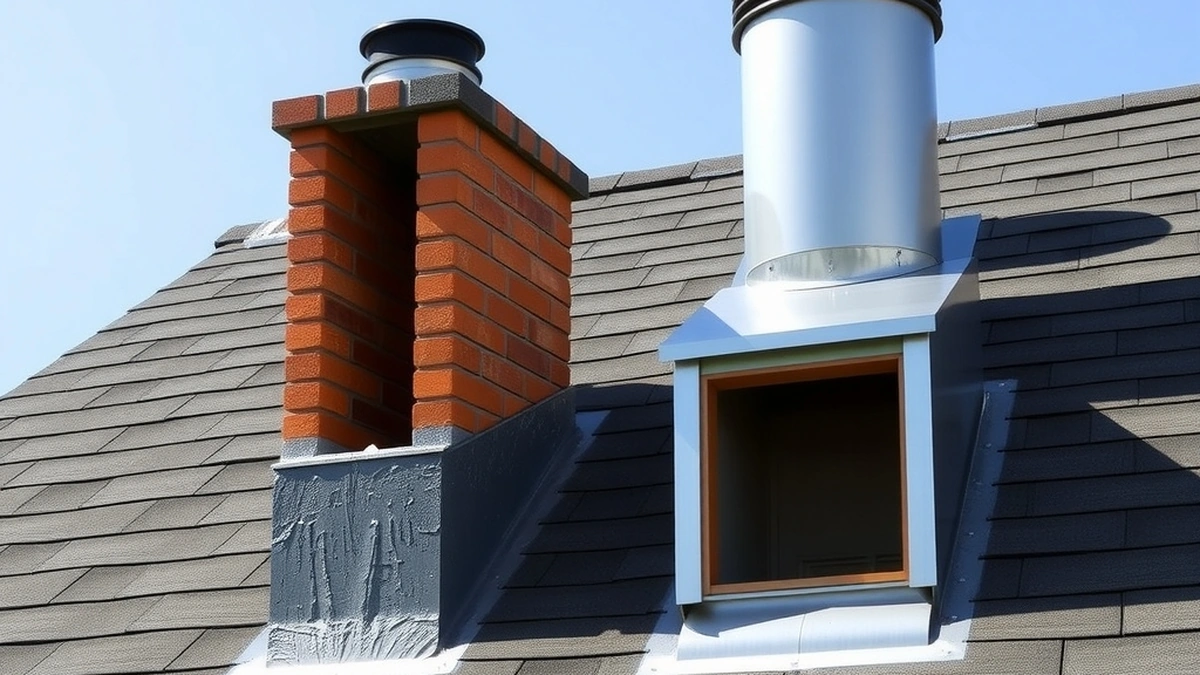
Cast-in-place relining seals the whole flue and suits irregular or leaking masonry; it runs about $100–$250 per foot. Stainless costs $1,500–$4,000 installed, installs faster, and suits sound straight flues. The flue condition decides, not the price.
- Cast-in-place per foot
- $100–$250
- Stainless installed
- $1,500–$4,000
- Inspection first
- $150–$800
- Crown and cap
- $150–$1,500
Some links on this page are affiliate links.If you buy through them we may earn a commission at no extra cost to you. We do not accept payment for rankings. Read the full disclosure.
Cast-in-place liner versus stainless relining comes down to the condition of the flue, not the price list. Cast-in-place fills cracks and voids and leaves a seamless bore, which is why it is used on deteriorated masonry. Stainless is a manufactured tube slid into a flue that is still structurally sound, and it installs faster for less money on a straight chimney. Get the inspection first, then the method follows.
How each method works
A cast-in-place liner is formed inside the chimney. The flue is cleaned, a form is lowered to the appliance’s required diameter, and a refractory mix is pumped into the gap. When the form is pulled, the lining is bonded to the masonry along its full length.
A stainless liner is manufactured off site. It is a corrugated or rigid tube, sized to the appliance, lowered down the flue from the top, and connected at the appliance collar with a top plate and cap at the other end.
The difference is where the material sits. Cast lining replaces the flue surface. Stainless lining creates a new flue inside the old one.
Bore size and draft
Both methods shrink the flue, and both shrink it in a way that affects draft.
| Method | Typical bore loss | Effect on draft |
|---|---|---|
| Cast-in-place | About 1 inch of diameter | Noticeable on a marginal flue |
| Flexible stainless | Less than 1 inch | Small, but corrugation adds resistance |
| Rigid stainless | Minimal | Best flow of the three |
A 10-inch flue lined to 9 inches loses about 19 percent of its cross-sectional area: 3.14 × 25 = 78.5 square inches before, 3.14 × 20.25 = 63.6 square inches after, a difference of 14.9 square inches. On an appliance already at the edge of its venting range, that is the difference between a clean light and smoke at the door.
Sizing is the part of the decision that is easy to get wrong and expensive to fix. The appliance listing gives the required flue area; the liner must meet it.
Cost, side by side
| Item | Cast-in-place | Stainless reline |
|---|---|---|
| Installed total, 25 ft | $2,500–$6,250 | $1,500–$4,000 |
| Per foot, 25 ft | $100–$250 | $60–$160 |
| Duration on site | 1–3 days plus cure | 1–2 days |
| Appliance downtime | 2–4 days | 1 day |
| Seals old cracks | Yes | No |
| Section replacement | Not possible | Possible |
| Needs straight flue | No | Rigid yes, flexible no |
The arithmetic is straightforward. At 25 feet, cast-in-place at the low end is 25 × $100 = $2,500; stainless at the low end is $1,500. At the high end, cast-in-place is 25 × $250 = $6,250; stainless is $4,000. Stainless is cheaper at both ends of the range for this flue length.
The gap narrows on a flue that needs masonry repair first. If the chimney requires a partial rebuild at $5,000–$15,000, the lining choice is a small part of the total and the sealing advantage of cast-in-place starts to matter more.
Sealing, durability, and inspection
A cast lining bonds to the masonry, so it closes the cracks and voids that let flue gas escape into the structure. A stainless liner covers those cracks rather than repairing them; gas that leaks past the liner at a joint can still reach the masonry.
That is the strongest argument for cast-in-place on an old chimney with spalled joints and a history of leaks.
Against it: a cast lining cannot be inspected as easily, cannot be replaced in sections, and its failure mode — delamination behind a smooth bore — is invisible until a camera goes in. A stainless liner can be pulled and replaced, and its seams and joints can be checked directly.
Neither system survives a failed crown. Water entering at the top is the leading cause of early failure in both, and crown repair at $400–$1,500 plus a cap at $150–$600 is money better spent than either lining upgrade.
When cast-in-place wins
- The flue is out of round, offset, or has multiple failed joints.
- The masonry is spalled or has voids that a tube would bridge rather than seal.
- There is a history of flue gas or moisture leaking into the structure.
- The chimney is historic or the exterior cannot be altered.
- A wood appliance needs a specific bore that no standard stainless diameter matches.
When stainless wins
- The flue is straight and structurally sound.
- Budget is the deciding constraint and the flue passes inspection.
- The appliance is being replaced and the liner must match a new listing.
- The chimney may need to be relined again in future and section replacement matters.
- The job needs to be finished in a day.
A decision sequence
- Book a Level 1 or Level 2 inspection at $150–$800 and get the findings in writing.
- Ask whether the flue is straight, sound, and correctly sized for the appliance.
- If the flue is irregular or leaking, price cast-in-place at $100–$250 per foot.
- If the flue is sound and straight, price a stainless reline at $1,500–$4,000.
- Price the crown and cap in both scopes so the totals are comparable.
- Confirm the finished bore meets the appliance’s required flue area before signing.
For the per-foot detail, see cast-in-place liner cost; for the metal side, stainless steel chimney liner. The failure modes of a poured lining are collected in cast-in-place liner problems, and if you are comparing two metal bids instead of two methods, stainless relining vs stainless relining covers that comparison. Service life for the chimney as a whole is covered in how long does chimney last.
Frequently asked questions
Is cast-in-place better than stainless relining?
Neither is universally better. Cast-in-place fills voids and seals cracks in failing masonry, while stainless is faster, cheaper on a straight flue, and replaceable in sections.
Which relining method costs less?
Stainless on most single straight flues. Installed stainless runs $1,500–$4,000, while cast-in-place runs about $100–$250 per foot, or $2,500–$6,250 on a 25-foot chimney.
Does cast-in-place reduce the flue size more?
Yes, typically by about an inch of diameter, sometimes more on an irregular flue. A stainless liner also reduces the bore but usually by less, since the wall is thinner.
Can a stainless liner go inside a cast-in-place liner?
Yes, and it is a common remedy when the poured lining has cracked or separated. The cast lining acts as the chase and the stainless liner becomes the new flue.
Which lasts longer?
Manufacturers of both claim decades of service. In practice the crown and cap decide the outcome, because water intrusion at the top is the leading cause of early failure in both systems.
Do I need an inspection before choosing?
Always. A Level 1 or Level 2 inspection at $150–$800 establishes whether the flue is straight, sound, and correctly sized, which is what determines whether a stainless liner will even fit.
Sources
Some links are affiliate links.If you buy through them we may earn a commission at no extra cost to you. We do not accept payment for rankings. Read the full disclosure.