Stainless relining vs tuckpointing
Relining repairs the flue at $1,500-$4,000; tuckpointing repairs mortar joints at $400-$1,500. Which symptom points to which, and why order matters.
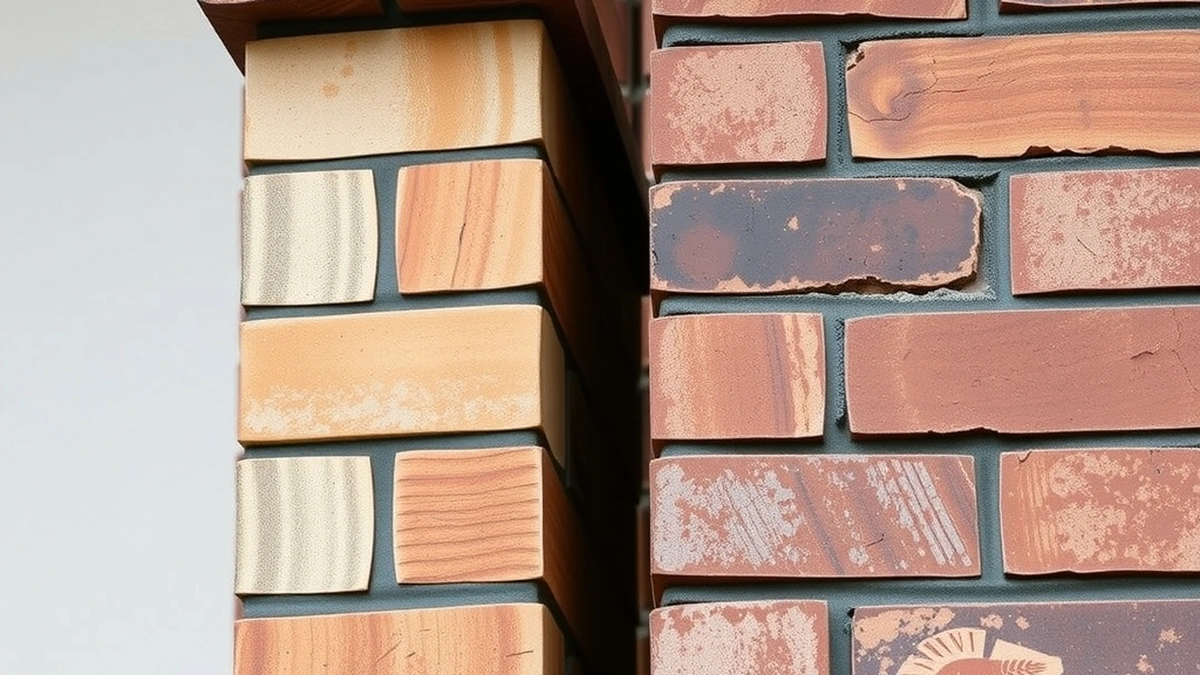
Stainless relining installs a new flue at $1,500 to $4,000. Tuckpointing renews the mortar joints in the brickwork at $400 to $1,500. One fixes venting, the other fixes the weather skin, and a chimney can need both for unrelated reasons.
- Relining
- $1,500 - $4,000
- Tuckpointing
- $400 - $1,500
- Crown repair
- $400 - $1,500
- Inspection
- $150 - $800
- Rebuild if ignored
- $5,000 - $15,000
Some links on this page are affiliate links.If you buy through them we may earn a commission at no extra cost to you. We do not accept payment for rankings. Read the full disclosure.
Stainless relining and tuckpointing are repairs to two systems that share a chimney and nothing else. Relining replaces the flue at $1,500 to $4,000. Tuckpointing renews the mortar joints at $400 to $1,500. Comparing them as alternatives is a category error, and it is a common one when a homeowner is handed a single “chimney repair” quote.
What each one repairs
A stainless liner is a steel tube installed inside the flue to carry combustion gases safely. It addresses a cracked, deteriorated, or wrongly sized flue.
Tuckpointing is the renewal of the outer mortar in the brick joints. It addresses the weather skin of the masonry.
One is inside, one is outside. Neither affects the other’s defect.
Head to head
| Attribute | Stainless relining | Tuckpointing |
|---|---|---|
| System | Flue | Masonry joints |
| Problem solved | Failed or undersized liner | Eroded mortar |
| Cost | $1,500 - $4,000 | $400 - $1,500 |
| Trade | Chimney technician | Mason |
| Life | 15-25 years | 20-30 years |
| Fixes the other | No | No |
| Found by | Camera inspection | Visual inspection |
The symptoms that point to each, and what the inspection reports
Relining symptoms are venting symptoms: poor draught, smoke spillage, corrosion on appliance parts, a smell of exhaust in the room, or a camera inspection showing cracked tile.
Tuckpointing symptoms are water symptoms: receding joints, mortar that crumbles under a fingernail, white staining, and damp patches on the masonry.
The two can appear together on an old chimney, which is why an inspection at $150 to $800 should report on both.
What the inspection should report.
An inspection at $150 to $800 is not a single answer. It is a report with separate findings.
On the masonry side it should note joint depth, mortar condition, spalled units, and the state of the crown and cap.
On the flue side it should note the liner type, its condition, any gaps or cracks, and whether the flue suits the appliance.
Ask for photographs at several heights and a written statement on whether the appliance can be used pending repair. A verbal “you need a liner” is not a diagnosis, and it is not something you can price against another quote.
Cost of doing both
Tuckpointing at $400 to $1,500. Stainless liner at $1,500 to $4,000. Total: $1,900 to $5,500.
Add a crown at $400 to $1,500 and a cap at $150 to $600, and the total is $2,450 to $7,600.
That is still below the partial rebuild band of $5,000 to $15,000, which is where long-term water damage to the masonry ends up.
Why the order matters
Water damage is progressive, so the masonry work usually comes first when both are needed.
Repointing under a failed crown is a repair that undoes itself, because water keeps entering at the top. So the sequence is crown, flashing, cap, then repointing.
The flue is separate. If it is compromised, the appliance should not be used until a technician has assessed it, regardless of the masonry schedule.
Where the trades divide, and what neither repair does
A mason can repoint, replace brick, rebuild a crown, and reset flashing.
A mason should not be altering flue sizing, installing a liner, or changing an appliance connection.
Those depend on the appliance’s listed venting requirements and local code, and they belong to a qualified chimney technician. If a mason offers to “line the flue while we are up there”, ask who is certifying the installation and whether a permit is being pulled.
What neither repair does.
Neither repairs spalled brick. Where faces have flaked away, the units have to be replaced before repointing, and repointing alone is cosmetic.
Neither repairs a water path at the crown or flashing. Both are separate scopes at $400 to $1,500 each.
Neither addresses structural movement. A leaning stack or a gap from the house needs an engineer’s assessment before cosmetic work.
The cost of getting the order wrong is easy to state. Repointing at $400 to $1,500 under a leaking crown fails within a few seasons, and the money is spent again. Relining at $1,500 to $4,000 into a flue surrounded by saturated masonry leaves the shell deteriorating, and the eventual rebuild at $5,000 to $15,000 arrives sooner than it needed to.
Neither mistake is unusual. Both come from treating a chimney as one system when it is two.
Choosing when the budget is limited
- Get an inspection that reports on masonry and flue separately.
- Take a compromised flue out of service until it is assessed.
- Fix the water paths at the top: crown, cap, flashing.
- Repoint the joints once the water is controlled.
- Reline when the flue assessment calls for it.
The third step is the one that protects the other four. Water entering at the top damages the masonry, the joints, and eventually the flue itself.
A repoint at $400 to $1,500 buys twenty to thirty years when the mortar is matched and the water above is controlled. A liner at $1,500 to $4,000 buys fifteen to twenty-five.
Neither figure is a guarantee. Both depend on the chimney staying dry, which is why the crown and flashing matter more than the material chosen for the joint or the flue.
The honest summary
Relining at $1,500 to $4,000 is a venting repair. Tuckpointing at $400 to $1,500 is a masonry repair.
A chimney can need one, the other, or both, and the decision comes from an inspection rather than from a price list. Our stainless relining cost and tuckpointing cost pages cover the pricing, and chimney repair cost sets out the full menu.
Frequently asked questions
Is relining more important than tuckpointing?
They address different risks. A failed flue is a venting hazard and the appliance should not be used; eroded joints are a water and structural problem that worsens each winter. Both need fixing, and the order depends on which is more urgent.
Can tuckpointing fix a chimney leak caused by the flue?
No. Repointing seals the wall face. A leak that originates inside the flue, or at the crown above it, is unaffected by new mortar.
Does relining fix crumbling mortar?
No. A liner sits inside the flue and has no effect on the outer joints. The masonry still admits water and still needs repointing.
Which costs more?
Relining, at $1,500 to $4,000, against $400 to $1,500 for tuckpointing. They are rarely alternatives, because they repair different defects.
Can both be done at once?
Yes, and often they are, because the scaffolding and access are shared. The mason and the technician work on separate scopes in the same visit.
How do I know which one I need?
An inspection at $150 to $800 that reports on the masonry and the flue separately. Damp walls point to masonry or water paths; draught and venting symptoms point to the flue.
Sources
Some links are affiliate links.If you buy through them we may earn a commission at no extra cost to you. We do not accept payment for rankings. Read the full disclosure.