Tuckpointing vs stainless relining: two systems
Tuckpointing repairs the masonry skin; stainless relining repairs the flue. Different defects, different costs, and why one never substitutes for the other.
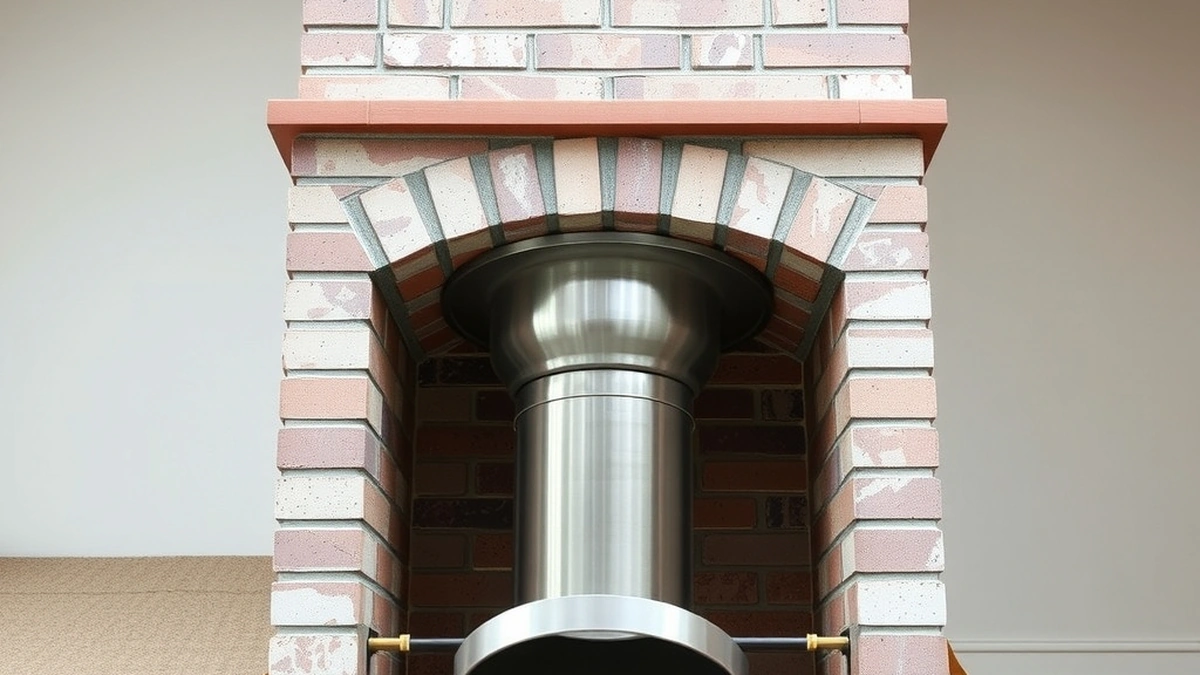
Tuckpointing repairs eroded mortar joints in the masonry at $400 to $1,500; stainless relining installs a new flue liner at $1,500 to $4,000. They fix different defects on the same chimney, and a sound flue does not make failing joints safe, or the reverse.
- Tuckpointing
- $400 - $1,500
- Stainless relining
- $1,500 - $4,000
- Crown repair
- $400 - $1,500
- Partial rebuild
- $5,000 - $15,000
- Inspection first
- $150 - $800
Some links on this page are affiliate links.If you buy through them we may earn a commission at no extra cost to you. We do not accept payment for rankings. Read the full disclosure.
Tuckpointing and stainless relining are repairs to two different systems that happen to share a chimney. Tuckpointing renews the mortar in the brickwork at $400 to $1,500. Relining installs a new flue at $1,500 to $4,000. Neither fixes the other’s defect, and a chimney can need both.
The two systems
A chimney is a masonry structure wrapped around a flue. The masonry carries the stack and sheds water. The flue carries combustion gases out of the building.
Tuckpointing is masonry work: cutting out eroded mortar and replacing it with matched mortar so the wall keeps its weather skin.
Stainless relining is venting work: installing a corrosion-resistant liner inside the existing flue so the appliance has a sound, correctly sized pathway for exhaust.
They are inspected separately, priced separately, and repaired by different trades.
That separation is not bureaucratic. A repointing crew works from the outside with mortar and a grinder. A relining crew works from the top and the appliance connection, measuring the flue and fitting a liner to the appliance’s requirements. The skills and the equipment do not overlap.
Head to head
| Attribute | Tuckpointing | Stainless relining |
|---|---|---|
| System | Masonry shell | Flue |
| Defect fixed | Eroded joints, water entry | Cracked or failed liner |
| Cost | $400 - $1,500 | $1,500 - $4,000 |
| Trade | Mason | Chimney technician |
| Permit | Sometimes | Often |
| Life | 20-30 years | 15-25 years |
| Fixes the other | No | No |
The “fixes the other” row is the one that matters. A liner does not stop water entering through bad joints, and repointing does not make a cracked flue safe to use.
What each defect looks like
Masonry failure shows on the outside: joints recessed past a quarter inch, mortar that crumbles under a fingernail, brick faces flaking, white staining after rain.
Flue failure shows on the inside: cracked or spalled tiles, gaps at the joints, a liner that has separated from the masonry, or a flue that is the wrong size for the appliance.
The second list is invisible from the ground, which is why a chimney inspection at $150 to $800 includes the flue and not just the brick.
A useful way to keep the two straight is to ask what the defect is stopping. Masonry failure stops water shedding: the wall stays wet and slowly loses brick. Flue failure stops safe venting: combustion gases and moisture have a path they should not have. One is a building-envelope problem, the other is a life-safety system, and they are prioritised differently.
Cost of doing both
A chimney with eroded joints and a failed liner:
Tuckpointing at $400 to $1,500. Stainless liner at $1,500 to $4,000. Total: $1,900 to $5,500.
Add a crown repair at $400 to $1,500 and the total is $2,300 to $7,000.
That is still below the partial rebuild band of $5,000 to $15,000, which is what years of unchecked water damage eventually costs.
Why the order is usually masonry first
Water damage is progressive. Every winter that water enters the masonry, more of the brick is lost, and the eventual repair gets larger.
So the usual sequence is: fix the water paths (crown, flashing, cap), repoint the joints, then address the flue.
The exception is safety. If the flue is compromised, no appliance should be used until a qualified technician has assessed it, regardless of the masonry schedule.
Where the trades divide
This is the part homeowners most often get wrong.
A mason can repoint, replace brick, rebuild a crown, and reset flashing. A mason should not be altering flue sizing, installing or modifying a liner, or changing an appliance connection.
Those decisions depend on the appliance’s listed venting requirements, the flue’s condition, and local code. They belong to a qualified chimney technician.
If a mason offers to “line the flue while we’re up there”, ask who is certifying the installation and whether a permit is being pulled. The answer tells you whether the work is being done properly.
Where each job stops, and choosing under a budget
Three conditions are outside tuckpointing’s scope.
Spalled brick. The units have to be replaced, not pointed around.
Structural movement. A leaning stack needs an engineer’s assessment before cosmetic work.
A failed liner. That is the relining scope.
Three conditions are outside relining’s scope.
Eroded joints. A liner sits inside the flue and does nothing for the outer wall.
A failed crown or flashing. Water entry at the top or roof line continues.
Spalled exterior brick. Cosmetic masonry damage is not addressed by a liner.
Choosing when the budget is limited.
If both defects are present and the budget only covers one, the order is set by risk.
A compromised flue is a safety issue, and the appliance should be taken out of service until it is assessed. That makes relining, or at least the assessment, the priority.
Eroded joints are a structural and water issue that gets worse each winter but rarely fails suddenly. Repointing can usually be scheduled.
In practice, most owners do both in one season, because the scaffolding and access cost is shared. A single scaffold up the stack can serve the repoint, the crown, the flashing, and the liner, which is why bundling the work is usually cheaper than three separate visits. Our chimney repair cost page sets out the full scope and price bands.
The inspection that sorts it out
A level 1 to 3 inspection at $150 to $800 reports on both systems: the exterior masonry, the crown, flashing, and cap, and the interior flue.
When you book it, ask for three things:
- A written report that separates masonry defects from flue defects.
- Photographs of the crown, the flashing, and the flue interior.
- A statement of whether the appliance can be used pending repair.
Ask for a written report that separates masonry defects from flue defects. That document is what lets you price the two jobs independently and decide the order.
Our tuckpointing cost page covers the masonry side, and stainless relining cost covers the flue side. For the failures that follow a bad repoint, see tuckpointing problems.
Frequently asked questions
Is tuckpointing the same as relining?
No. Tuckpointing renews the mortar joints in the brickwork. Relining installs a new flue liner inside the chimney. One is masonry, the other is a venting system.
Can relining fix crumbling mortar?
No. A liner sits inside the flue and has no effect on the outer masonry joints. Crumbling joints still admit water and still need repointing.
Can tuckpointing fix a cracked flue?
No. Repointing is exterior masonry work. A cracked or deteriorated flue tile needs a liner, and that work belongs with a qualified chimney technician.
Which should I do first?
Diagnose both. Water damage is usually the priority because it keeps damaging the structure, but the flue has to be assessed before any appliance is used. Often the two jobs are done together.
How much do both together cost?
Spot repointing at $400 to $1,500 plus a stainless liner at $1,500 to $4,000 is $1,900 to $5,500. Add a crown at $400 to $1,500 and the total rises to $2,300 to $7,000.
Do I need a permit for either?
Relining often requires one, and masonry work may depending on the jurisdiction and any historic designation. Ask the contractor who is pulling the permit and confirm it in writing.
Sources
Some links are affiliate links.If you buy through them we may earn a commission at no extra cost to you. We do not accept payment for rankings. Read the full disclosure.