Tuckpointing problems: why repointing fails
Repointing fails four ways: wrong mortar, shallow cuts, wet joints, and a crown still leaking above. How to tell which one you have and what the fix costs.
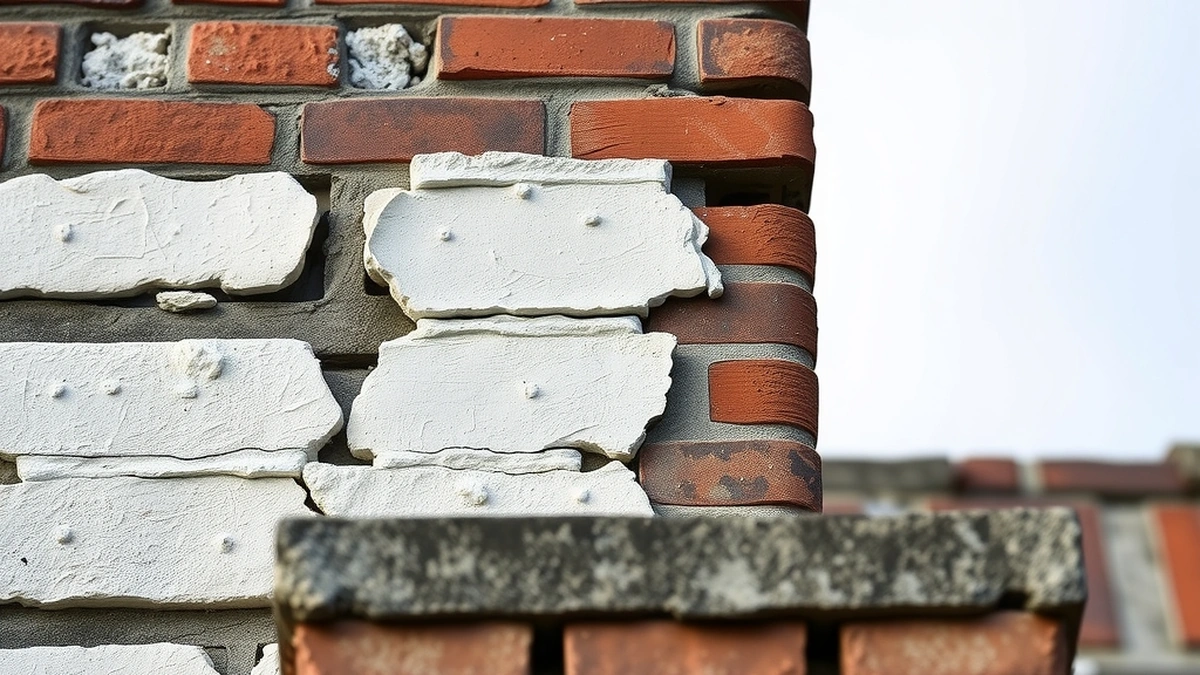
The common tuckpointing problems are mortar that crumbles within a season, brick faces spalling around fresh joints, cracks at the joint edges, and water still entering after the job. The first three point to a mortar mismatch; the fourth points to an unfixed crown or flashing.
- Most common cause
- Mortar harder than the brick
- Second cause
- Joints cut too shallow
- Third cause
- Water path left open
- Repoint cost
- $400 - $1,500
- Rebuild if brick fails
- $5,000 - $15,000
Some links on this page are affiliate links.If you buy through them we may earn a commission at no extra cost to you. We do not accept payment for rankings. Read the full disclosure.
Most tuckpointing problems come from one of four causes: mortar that is harder than the brick, joints cut too shallow, joints packed when too dry, or a water path above that was never fixed. Three of those are installation errors. The fourth is a diagnosis error, and it is the one that makes a brand-new repoint look no better than the old one.
What good repointing looks like
Tuckpointing is the renewal of the outer mortar in a masonry joint, cut back and replaced with mortar matched to the brick.
A correct job has joints cut to about twice their width, cleaned and dampened, packed in passes, tooled to shed water, and cured slowly.
Two years later, those joints should look like the surrounding masonry, with no cracking at the edges and no brick faces flaking.
Symptom, cause, and fix
| Symptom | Cause | Fix |
|---|---|---|
| Mortar crumbles in a season | Lean mix or too-fast drying | Cut out, repoint, cure damp |
| Brick faces flaking near joints | Mortar harder than the brick | Replace brick, repoint with softer mix |
| Cracks at joint edges | Shallow cut or no key | Cut deeper, repoint |
| Joints hollow when tapped | Packed too dry | Remove and repack damp |
| Water still entering | Crown, flashing, or cap | Fix the water path first |
| White staining on the face | Efflorescence from trapped water | Find and stop the water source |
The second row is the most serious, because it damages the brick rather than the repair. That is the one that turns a $400 to $1,500 job into a $5,000 to $15,000 rebuild.
The mortar mismatch
Mortar is meant to be the sacrificial layer. It should be softer and more permeable than the brick, so it erodes first and takes the freeze-thaw damage.
Modern high-cement mortar is strong, hard, and nearly impermeable. On old, soft brick it behaves like a rigid skin: water that enters the wall cannot escape through the joint, so it exits through the brick face, and the face spalls.
The tell is the pattern. Spalling that appears in a band beside fresh joints, within a few years of repointing, is a mortar mismatch. Spalling that is spread across the wall is more likely age and general water exposure.
The fix is to replace the affected brick and repoint with a mix matched to the original, usually lime-rich on older chimneys.
Shallow cuts
Cutting joints to less than twice their width leaves old mortar in place. New mortar bonds to that weak layer rather than to sound material.
The failure appears as joints that crack along the boundary between old and new, or as whole sections that come away in strips.
It is also the cheapest shortcut for a contractor to take, because cutting is the slowest part of the job. A quote that is well below the $400 to $1,500 band for spot repointing is often a quote for a shallow cut.
Ask what depth the joints will be cut to, and get an answer in inches rather than “as needed”.
Dry joints and fast drying
Mortar needs water to cure. Two failures come from getting that wrong.
Packing mortar into a dry joint lets the brick pull the water out, leaving the mortar crumbly and poorly bonded.
Letting the finished joint dry in hot sun or wind causes shrinkage cracks before the mortar has gained strength.
The fix is to dampen the joint before packing and to mist the finished work for a few days. Both are simple, and both are frequently skipped on a fast job.
The water path that was never fixed
Repointing seals the wall face. It does not seal the top of the chimney or the roof line.
If the crown is cracked or flat, water enters the top of the stack and travels down inside the masonry. New joints on the outside do not stop it, and the freeze-thaw cycle continues.
If the flashing at the roof line has failed, water enters behind the brick at the base of the chimney, and again the joints are not the entry point.
If the cap is missing, rain goes straight down the flue.
A repoint done before those are fixed looks good for one season. Our chimney leak repair guide covers the water paths in order, and crown rebuild reviews covers the top-of-stack repair.
What repointing cannot fix
Three conditions are outside its scope.
Spalled brick. Where faces have flaked away, there is nothing for mortar to hold.
A failed liner. A cracked flue tile is a separate defect, and a stainless liner at $1,500 to $4,000 is the usual repair. Liner and venting work belongs with a qualified chimney technician.
Structural movement. A leaning stack or a gap from the house needs an engineer’s assessment before cosmetic work.
Repairing failed tuckpointing
- Tap the joints; hollow sound means the mortar has debonded.
- Cut out the failed material to the full depth, not just the visible surface.
- Replace any brick that has spalled, rather than pointing around it.
- Repoint with a mix matched to the brick, dampened and cured.
- Fix the crown, cap, and flashing before or alongside the repoint.
Redoing the work properly usually costs more than the original quote, which is the argument for vetting the first job. The cut-out alone doubles the labor, and any brick replacement lands on top of that. Our tuckpointing cost page covers what a correct job prices at, and tuckpointing installation covers the sequence step by step.
Frequently asked questions
Why is my new mortar crumbling?
Usually because it dried too fast or was mixed too lean and never cured properly. Shallow joint cuts also cause it, because the new mortar is bonded to old, weak material rather than to sound brick.
Why is my brick spalling after repointing?
The new mortar is harder and less permeable than the brick, so freeze-thaw damage has moved into the brick face. That is the classic result of using modern high-cement mortar on old soft brick.
Why is water still coming in after repointing?
The water is entering somewhere else: a cracked crown, failed flashing, or an open flue. Repointing seals the wall face only, and it cannot compensate for a leak above or below it.
How long should repointing last?
Twenty to thirty years with correct mortar and sound brick. Failures within one to five years almost always trace to mortar mismatch, shallow cuts, or a water path that was never fixed.
Can failed tuckpointing be redone?
Yes, but the failed mortar has to be cut out again, and if the brick has spalled, the affected units must be replaced. Redoing cheap work usually costs more than doing it once.
Is painting a chimney a fix for bad mortar?
No. Masonry paint traps moisture and accelerates spalling. It hides the symptom and shortens the life of the wall.
Sources
Some links are affiliate links.If you buy through them we may earn a commission at no extra cost to you. We do not accept payment for rankings. Read the full disclosure.