Cast-in-place liner cost: per-foot pricing and totals
Cast-in-place liner cost by the foot, what drives the number, and how it compares with a stainless reline. Each figure comes with its arithmetic.
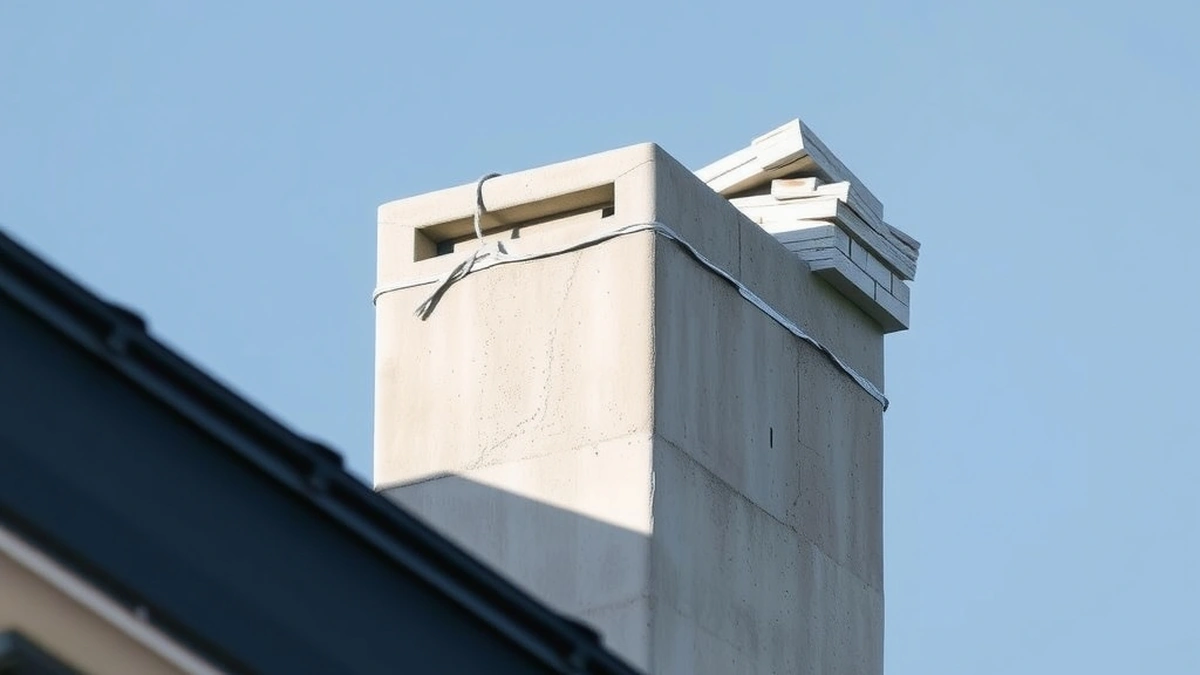
Cast-in-place liner cost runs roughly $100–$250 per linear foot installed, or about $2,500–$6,250 for a 25-foot flue. That is usually above a stainless reline at $1,500–$4,000, and the gap widens on short flues where setup dominates.
- Per linear foot
- $100–$250
- 25 ft flue total
- $2,500–$6,250
- Stainless comparison
- $1,500–$4,000
- Inspection first
- $150–$800
Some links on this page are affiliate links.If you buy through them we may earn a commission at no extra cost to you. We do not accept payment for rankings. Read the full disclosure.
Cast-in-place liner cost runs about $100–$250 per linear foot installed, which puts a typical 25-foot flue between $2,500 and $6,250. For most single-family chimneys that is more than a stainless reline at $1,500–$4,000, and the reason is setup: forms, mixing, and cure time cost the same whether the flue is short or long. The per-foot number is the only honest way to compare bids, because flat quotes hide the length.
What you are paying for
A cast-in-place liner is a refractory or cementitious lining formed inside the existing flue. The crew cleans the chimney, lowers an inflatable or rigid form, pumps the lining material into the annular space, lets it cure, then removes the form. What remains is a smooth, round, seamless bore bonded to the old masonry.
That process buys three things a stainless liner does not: it fills irregular voids and cracks in the old flue, it seals the entire length rather than just lining it, and it leaves no seams. It also costs more labor hours, and labor is where the money goes.
The per-foot math
The estimate breaks into four parts. Material and mixing, form setup, pumping and finishing, and cure time on site.
| Flue length | At $100 per ft | At $175 per ft | At $250 per ft |
|---|---|---|---|
| 15 ft | $1,500 | $2,625 | $3,750 |
| 25 ft | $2,500 | $4,375 | $6,250 |
| 30 ft | $3,000 | $5,250 | $7,500 |
| 35 ft | $3,500 | $6,125 | $8,750 |
Read a 25-foot job at the midpoint: 25 × $175 = $4,375. Compare that with a stainless reline at the midpoint of its range: $1,500 + $4,000 = $5,500, divided by 2 = $2,750. The cast-in-place premium on that chimney is $4,375 − $2,750 = $1,625.
Now run a 35-foot chimney. Cast-in-place at the midpoint is 35 × $175 = $6,125. Stainless at its high end is $4,000. The premium is $2,125. Setup is amortized over more feet, but pumping and material scale with length, so the gap holds.
Two flues change the arithmetic again. A house with a furnace flue and a fireplace flue, 20 feet each, is 40 linear feet of work: 40 × $150 = $6,000. Both flues can share one mobilization, which is why the per-foot rate usually drops on multi-flue jobs.
What moves the number
- Height and access. A chimney on a steep roof needs staging, which adds labor hours before any lining work starts.
- Flue condition. A flue that is out of round, offset, or partially collapsed needs extra prep and sometimes a partial rebuild at $5,000–$15,000 before lining is possible.
- Number of flues. Two or three flues share mobilization and drop the per-foot rate.
- Appliance type. A wood appliance requires a lining rated for higher flue gas temperatures, which costs more per bag than a standard mix.
- Cure conditions. Cold or wet weather extends cure time and can require heat or a longer site hold.
Cast-in-place versus stainless on price
| Item | Cast-in-place | Stainless reline |
|---|---|---|
| Typical installed total | $2,500–$6,250 | $1,500–$4,000 |
| Cost per foot at 25 ft | $100–$250 | $60–$160 |
| Seals old cracks | Yes, fills voids | No, covers them |
| Bore size after | Reduced | Reduced |
| Install time | 1–3 days plus cure | 1–2 days |
| Best for | Irregular, spalled, or leaking flues | Straight flues in sound masonry |
The stainless range divides cleanly by length: at 25 feet, $1,500 ÷ 25 = $60 per foot at the low end and $4,000 ÷ 25 = $160 per foot at the high end. Cast-in-place starts above that per-foot floor because the material is placed, not slid.
Where a cheap cast-in-place quote loses money
The failure mode is a thin lining. Material thickness drives both insulation value and service life, and a bid that undercuts the market usually undercuts the thickness. Ask what thickness is specified, in inches, and ask whether it meets the appliance listing.
The second failure is a missing crown. A liner only works if water stays outside the chimney. Crown repair runs $400–$1,500 and a cap runs $150–$600; if neither appears on the estimate, add them before you compare totals. Water entering at the top is the most common reason a new liner fails early.
There is also a scope trap on multi-flue chimneys. Quotes sometimes price only the flue the homeowner uses and leave the second flue as an optional add-on, which makes the headline number look competitive. Ask for the linear footage per flue and a total for all flues, then divide by the total footage to get a rate you can compare honestly.
How to build a comparable budget
- Book a Level 1 or Level 2 inspection first. It runs $150–$800 and tells you whether lining is even the right repair.
- Get the linear footage in writing, measured from the appliance collar to the top of the flue.
- Ask for the lining thickness and the temperature rating, not just the brand name.
- Price the crown and cap as separate lines so you can see what is included.
- Confirm cure time and when the appliance can go back into service.
- Check whether the crew pulls a permit and who schedules the final inspection.
For the process itself, see cast-in-place liner installation, and for the trade-offs against metal, read cast-in-place liner vs stainless relining. If your crown is already cracked, chimney crown repair cost explains the separate line item, and chimney inspection cost covers what the first visit should include.
Frequently asked questions
How much does a cast-in-place liner cost per foot?
Plan on roughly $100–$250 per linear foot installed. The low end assumes good access, a single straight flue, and a short run. The high end covers scaffolding, multiple flues, or an irregular bore.
Is a cast-in-place liner cheaper than stainless?
Usually not for a single straight flue. Stainless relining runs $1,500–$4,000 installed, while cast-in-place work generally starts higher because of form setup, mixing, and cure time.
Why does a cast-in-place liner cost more on a short chimney?
Setup is fixed. The form, mixing equipment, and crew mobilization cost the same whether the flue is 15 feet or 30 feet, so a short run carries a higher cost per foot.
Does the price include the crown and cap?
Usually not. Crown repair runs $400–$1,500 and a chimney cap runs $150–$600, both typically quoted separately. Ask for a line-item estimate so nothing appears at closeout.
How long does a cast-in-place liner last?
Manufacturers commonly claim 50 years or more for a properly installed refractory liner, but that figure assumes annual inspection and a sound crown. Water intrusion is the most common cause of early failure.
Can cast-in-place work be done on a clay tile flue?
Yes, that is the usual application. The existing tiles are cleaned and the new lining is formed inside them, which is why the finished bore is smaller than the original flue.
Sources
Some links are affiliate links.If you buy through them we may earn a commission at no extra cost to you. We do not accept payment for rankings. Read the full disclosure.