Chimney cleaning cost: $150 to $400 per flue
What a chimney cleaning costs by flue count and creosote level, why the quote moves, and how to compare two estimates line by line.
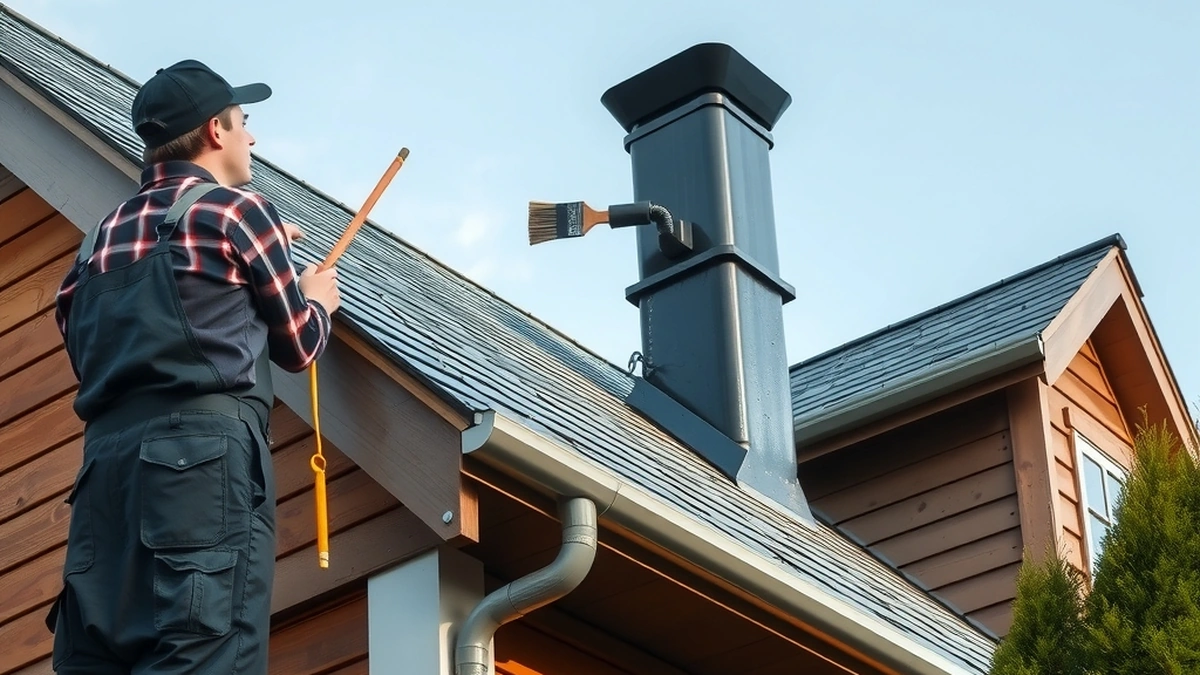
Chimney cleaning costs $150 to $400 per flue in the US, and a two-flue chimney runs $300 to $800. Heavy creosote, difficult roof access, and a same-day inspection push the total toward the top of that range.
- One flue
- $150 - $400
- Two flues
- $300 - $800
- Add an inspection
- $150 - $800
- Typical visit time
- 45 to 90 minutes per flue
Some links on this page are affiliate links.If you buy through them we may earn a commission at no extra cost to you. We do not accept payment for rankings. Read the full disclosure.
Chimney cleaning costs $150 to $400 per flue in the United States. A chimney with a fireplace flue and a furnace flue is two services, so the house total is $300 to $800 rather than $150 to $400. The band is narrow because the work is standardized; what moves the price is creosote, roof access, and what the technician finds once the brush is out.
Cleaning and sweeping mean the same thing here. A sweep is the trade, the cleaning is the job, and both describe brushing soot and creosote out of a flue. Neither word implies a detailed inspection, which is the misunderstanding that produces most of the arguments about price.
What the cleaning covers
A chimney cleaning is the mechanical removal of soot, creosote, and blockages from the flue, smoke chamber, and firebox. A standard visit brushes the full flue length with a poly or wire brush, cleans the smoke shelf and damper area, vacuums the firebox floor, and bags the debris so it leaves the house rather than settling on the rug.
Three things are usually outside the price. A written inspection report with photographs is a separate service. A camera scan of the flue interior is a separate service. Repairs, and any roof work the technician judges unsafe, are quoted after the cleaning rather than folded into it. Ask which of the three the number covers before you book, because that is where two quotes for “cleaning” stop being comparable.
Price by flue count
Each flue is a separate service. The technician saves a trip on a multi-flue stack but not the brushing, vacuuming, or bagging, so the second flue is close to full price.
| Flues | Typical range | Arithmetic |
|---|---|---|
| One | $150 - $400 | base visit |
| Two | $300 - $800 | 2 x $150 to 2 x $400 |
| Three | $450 - $1,200 | 3 x $150 to 3 x $400 |
| One plus inspection | $300 - $1,200 | $150 + $150 = $300; $400 + $800 = $1,200 |
A three-flue house at the top of the range pays $1,200 for an annual service. Before booking it, check whether all three flues are in use. A disused flue still needs a cap and an occasional inspection, but it does not need brushing every year.
Creosote is the variable that matters
Creosote is the tarry residue that condenses on a flue wall when wood burns cool or wet. Light soot is a routine pass with a poly brush. Glazed, hardened creosote is a different job: it does not brush off, it has to be softened with a chemical agent and cut back with a rotary head, and that adds time, material, and sometimes a second visit.
Measured in the field, glazed buildup is the top of three degrees, and it is the one that turns a maintenance call into a fire-risk conversation. A sweep who finds it should stop and report rather than brush through it and leave. Expect the upper half of the $150 to $400 range, plus a recommendation to inspect at $150 to $800 before the appliance runs again.
Access, season, and region
Roof access is the second large variable. A walkable low-pitch roof is quick work. A steep pitch, a high ridge, a metal roof, a chimney set in a valley, or a house where the ladder cannot be footed safely all add labor or force a bottom-up cleaning that takes longer and makes more dust inside.
Season changes the number more than homeowners expect. September through November is the booking crunch, and some companies charge full rate or a premium because the calendar is full. Late spring and summer are slower, and a sweep is more likely to discount then. Region matters for the same reason it matters in any trade: metro labor rates sit above rural rates for the same hour of work.
Cleaning versus cleaning plus inspection
| Service | What you get | Typical cost |
|---|---|---|
| Cleaning only | Brushed flue, clean firebox, debris removed | $150 - $400 |
| Cleaning plus Level 1 inspection | The above, plus a visual report on accessible parts | $300 - $1,200 |
| Cleaning plus Level 2 inspection | The above, plus camera scan and review of accessible attic, crawl, and roof | Top of the range and above |
The middle row is the sensible default for a wood-burning appliance. Cleaning exposes the flue wall and the inspection reads it, and the two protect each other. Booking them separately costs the same or more and risks the second visit missing what the first one saw.
How to compare two quotes
- Ask whether the price is per flue or per chimney, and how many flues the quote covers.
- Ask what is included: brushing, smoke shelf, firebox vacuum, debris removal, written report.
- Ask whether the technician will go on the roof, and whether the price changes if he will not.
- Ask what heavy creosote adds, so the number does not move at the door.
- Ask for the technician’s credential and the company’s liability insurance.
- Ask whether any chemical treatment is included, and which one, because some removers are aggressive on older clay tile.
A quote that answers all six in writing is worth more than one that is fifty dollars cheaper and vague.
When the cleaning finds a repair
A cleaning is a diagnostic moment as much as a maintenance one. The common findings, in ascending order of money: a missing or rusted cap at $150 to $600, a cracked crown at $400 to $1,500, a failed liner at $1,500 to $4,000, and masonry that needs a partial rebuild at $5,000 to $15,000.
None of those should be authorized on the spot. Get the finding in writing with a photograph, then get a second quote on the same scope. The exception is a genuine safety finding: a blocked flue, evidence of a chimney fire, or a cracked heat exchanger on a gas appliance. Those get fixed before the appliance runs again, and the price conversation happens afterward.
For the service on its own, see chimney sweep cost. For the report that follows it, see chimney inspection cost. For the residue that drives the upper range, see creosote build-up signs. For the repair ladder, see chimney repair cost and chimney liner cost.
Frequently asked questions
How much does chimney cleaning cost?
Between $150 and $400 for a single flue in most US markets. The price covers brushing the flue, cleaning the smoke shelf and damper, vacuuming the firebox, and removing the debris.
Is cleaning the same as sweeping?
Yes. A sweep is the trade and the cleaning is the service. Some companies use one word, some the other, and a few use both on the same invoice to make one visit look like two.
Why does a two-flue chimney cost double?
Each flue is brushed and vacuumed separately, so the labor is close to double even though the technician makes one trip. Expect 2 x $150 to 2 x $400, or $300 to $800.
Does the price include an inspection?
Not usually. A sweep reports what he can see while cleaning, but a written inspection with photographs runs $150 to $800 and is a separate line item.
How often should a flue be cleaned?
Once a year for most wood-burning appliances, or after every cord of wood burned. Gas appliances need an annual check but produce little soot, so a full brushout is rarely necessary.
Can I clean my own chimney?
You can buy the rods and brush, but the job puts you on a roof, and it does not include a look at the flue wall. A professional visit costs less than one emergency call for a blockage.
Sources
Some links are affiliate links.If you buy through them we may earn a commission at no extra cost to you. We do not accept payment for rankings. Read the full disclosure.