Chimney inspection cost by level, explained
A chimney inspection costs $150 to $800 depending on level. What Level 1, 2, and 3 each cover, when you actually need the camera, and how to read the report.
A chimney inspection costs $150 to $800 in the US. Level 1 is a visual check at the bottom of that range, Level 2 adds camera and accessible spaces, and Level 3 adds demolition access at the top.
- All levels
- $150–$800
- Sweep
- $150–$400
- Cap installed
- $150–$600
- Stainless liner
- $1,500–$4,000
Some links on this page are affiliate links.If you buy through them we may earn a commission at no extra cost to you. We do not accept payment for rankings. Read the full disclosure.
A chimney inspection costs $150 to $800. The range is wide because “inspection” covers three different scopes, and the level you need is set by what changed since the last one, not by what the company prefers to sell.
For most houses, the answer is a Level 2 at the middle of that range. For a routine annual check on a chimney that was inspected last year, a Level 1 at the bottom is enough.
What an inspection actually is
A chimney inspection is a documented evaluation of the chimney’s condition, from the appliance connection to the termination, performed to a defined scope and reported in writing. The scope levels come from the national chimney and venting standard, and they exist so that a buyer, an insurer, and a sweep are all talking about the same thing.
An inspection is not a cleaning. A cleaning is not an inspection. Companies that sell one as the other are the reason the two get confused.
The three levels compared
| Level | Scope | Access required | Where it sits in $150–$800 |
|---|---|---|---|
| Level 1 | Visual check of readily accessible parts: firebox, damper, visible flue, cap, crown, exterior | None beyond normal access | Bottom of the range |
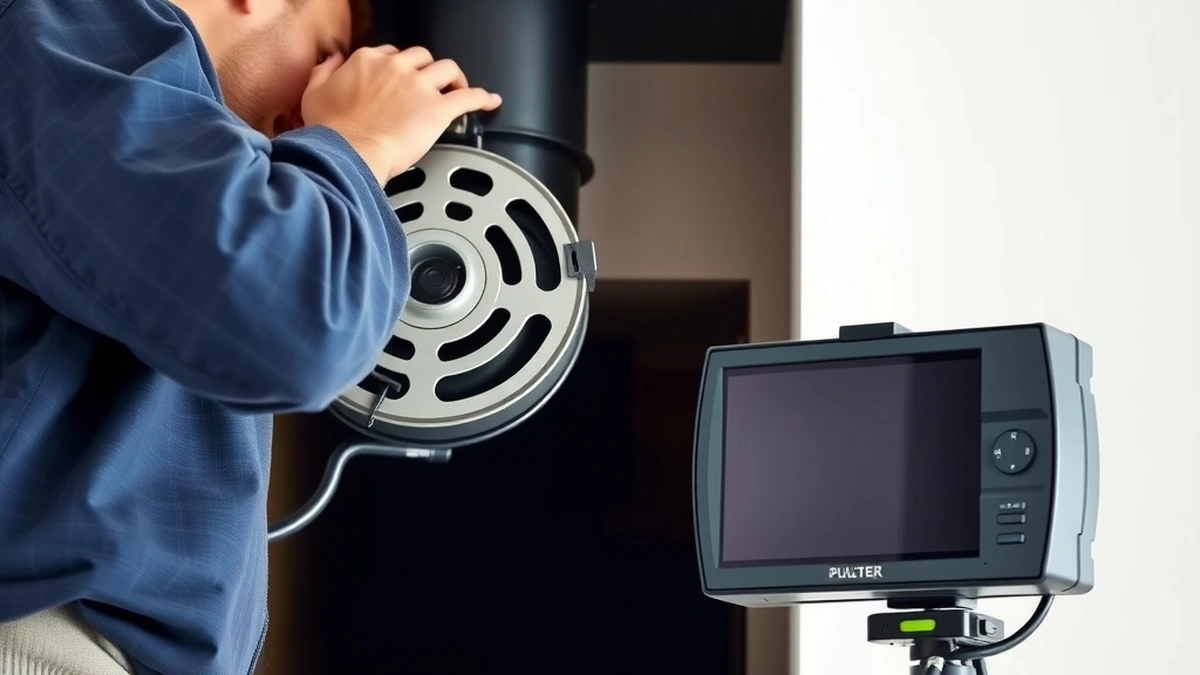
| Level 2 | Level 1 plus camera inspection of the flue, and review of accessible attic, crawl space, and roof | Camera, roof access, attic hatch | Middle to upper middle |
| Level 3 | Level 2 plus opening concealed areas to reach a suspected hazard | Demolition of finishes, permits sometimes | Top of the range |
The price difference between levels is labor and equipment, not expertise. A Level 2 costs more because someone has to run a camera down the flue, get on the roof, and look in the attic. A Level 3 costs the most because drywall or masonry gets opened.
Buy the level that answers your question. If the question is “is this safe to burn this winter,” Level 1 or 2 answers it. If the question is “why is there water in the chase,” you may need Level 3.
What pushes the price up
Number of flues. Each flue gets examined. A two-flue chimney is more work than a one-flue chimney even at the same level.
Roof access. A steep pitch, a high ridge, or a chimney on a valley side adds time and equipment.
Camera work. A flue with offsets, a smoke chamber, or a long horizontal run takes longer to video than a straight stack.
Report quality. A written report with labeled photographs is worth more than a verbal summary, and some companies charge for it. Ask before booking.
Travel. Rural areas carry trip charges that urban customers never see.
The arithmetic on common bookings
Inspection alone, all levels: $150 to $800.
Sweep plus inspection, the standard annual visit: $150 + $150 = $300 at the low end, and $400 + $800 = $1,200 at the high end.
Two flues, sweep and Level 2 inspection: the sweep doubles to $300 to $800, and the inspection moves toward the middle of its range. Budget $600 to $1,600 for the pair.
Ten years of annual inspection at the low end: 10 × $150 = $1,500. At the high end: 10 × $800 = $8,000. Compare that with the cost of one missed defect: a liner at $1,500 to $4,000, a crown at $400 to $1,500, or a partial rebuild at $5,000 to $15,000.
That last comparison is the whole argument for the low end of the range. An annual Level 1 at $150 is cheaper than almost any repair it can catch.
When an inspection is not optional
Four situations where skipping it is a bad idea rather than a saving.
Buying or selling a house. The inspection is a negotiating document. Sellers who have one avoid renegotiation; buyers who order one avoid inheriting a $5,000 to $15,000 rebuild.
After a chimney fire. Even a small fire can crack tile and distort metal. The flue needs camera inspection before it is used again.
Changing the appliance. A new insert, stove, or furnace changes the required flue size and temperature rating. The flue that served the old appliance may be the wrong size for the new one.
After a flood, earthquake, or roof replacement. Anything that moved the stack or opened the flashing is a reason to look.
What the report should contain
Ask for these before you pay, and treat their absence as a reason to book elsewhere.
- The inspection level performed and the standard it was performed to.
- The flue size, liner type, and liner condition, described in plain terms.
- Photographs of the firebox, damper area, flue interior, crown, cap, and flashing.
- Findings separated into safety issues, code issues, and maintenance items.
- Recommended actions with no prices attached, so you can get competitive quotes.
- The technician’s name and credential, and the date of the inspection.
How to book one
- Decide what question you need answered, then pick the level that answers it.
- Ask whether the sweep is included and what it adds to the price.
- Confirm the report is written, photographic, and delivered by email within a few days.
- Ask whether the technician will go on the roof, and what happens if he will not.
- Book in spring or early summer if you can. Pre-winter slots are the most expensive and the hardest to get.
- Read the findings before authorizing any repair, and get a second quote on anything above $1,500.
For the cleaning side of the visit, see chimney sweep cost. For what the findings usually turn into, see chimney repair cost and chimney flashing repair. If the report recommends relining, stainless steel chimney liner covers the options and how long does chimney last covers whether the chimney is worth the investment.
One thing to keep straight
An inspection that finds nothing is a good outcome, not a wasted $150. The value is the documented baseline: next year’s inspector compares against it, a buyer reads it, and an insurer accepts it.
What you should not accept is an inspection that ends in a same-day repair quote for work in the $1,500 to $15,000 range from a company that also performs the work, with no photographs and no written report. That is a sales visit with a flashlight.
Frequently asked questions
How much does a chimney inspection cost?
Between $150 and $800 depending on the level and the access required. A Level 1 visual inspection sits near the bottom, and a Level 3 with demolition access sits at the top.
What is the difference between Level 1, 2, and 3 inspections?
Level 1 is a visual examination of accessible parts. Level 2 adds camera inspection of the flue and checks of accessible attics, crawl spaces, and the roof. Level 3 opens concealed areas when a hazard is suspected.
Do I need an inspection before selling my house?
It is not legally required in most places, but it is the document that settles chimney questions during negotiation. Without it, a buyer inspection finding becomes your problem under time pressure.
Is a camera inspection worth the extra cost?
Yes when the flue is unlined, has had a fire, is serving a new appliance, or is being evaluated for a liner. For a routine annual check on a sound chimney, a Level 1 is sufficient.
How long does a chimney inspection take?
A Level 1 usually takes 30 to 60 minutes. A Level 2 with camera work commonly takes 60 to 90 minutes, and a Level 3 can take most of a day because it involves opening finished surfaces.
Can an inspection fail?
Inspections do not pass or fail. They report condition. What you get is a list of findings with recommended actions, and the report should separate safety issues from maintenance items.
Sources
Some links are affiliate links.If you buy through them we may earn a commission at no extra cost to you. We do not accept payment for rankings. Read the full disclosure.