Chimney Cap with Mesh Screen: Buying Guide and Costs
Compare mesh screen chimney caps by material, fit, and cost. Learn what to expect for installation and maintenance.
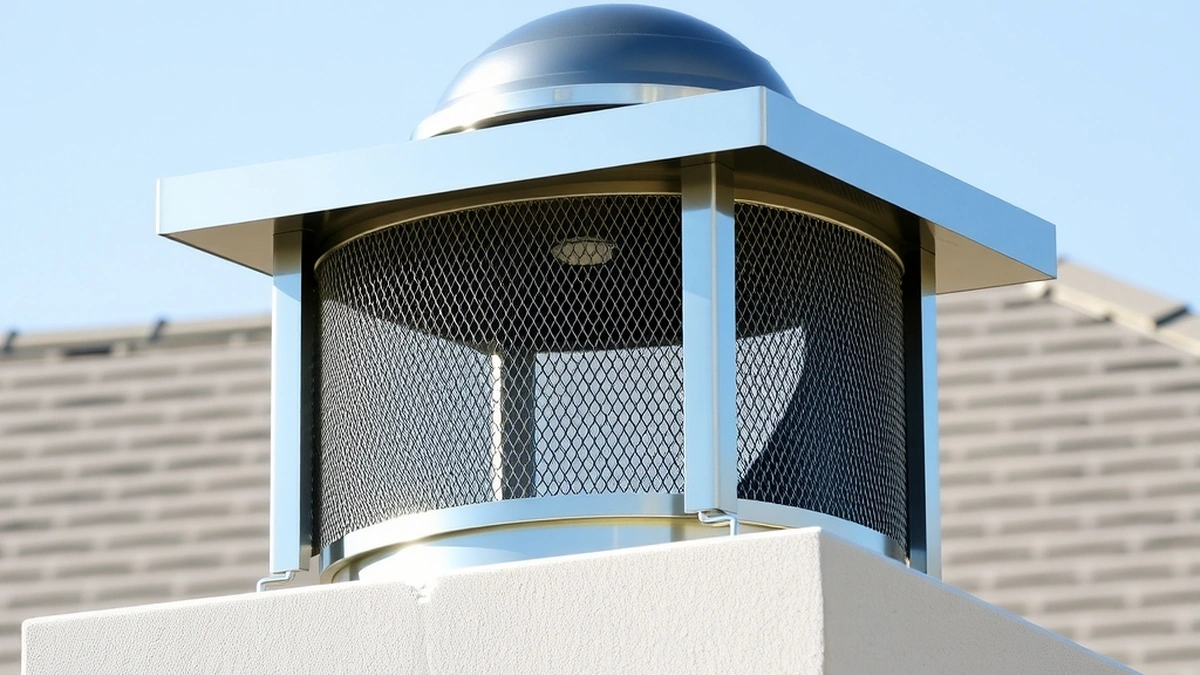
A chimney cap with mesh screen typically costs $150 to $600 installed and keeps rain, debris, and animals out while allowing flue gases to vent.
- Typical installed cost
- $150–$600
- Common materials
- Galvanized steel, aluminum, stainless steel, copper
- Mesh opening size
- 1/2 inch or 3/4 inch
- Chimney sweep cost
- $150–$400
- Level 1–3 inspection cost
- $150–$800
Some links on this page are affiliate links.If you buy through them we may earn a commission at no extra cost to you. We do not accept payment for rankings. Read the full disclosure.
A chimney cap with mesh screen is a metal cover that sits on top of the chimney and uses a wire mesh barrier to keep rain, debris, and animals out of the flue. It allows combustion gases to exit while blocking unwanted entry from above. Installed costs typically range from $150 to $600, depending on material, chimney dimensions, and labor.
What a Chimney Cap with Mesh Screen Does
A chimney cap serves three basic functions: shedding water away from the flue opening, preventing animals and debris from entering, and containing sparks or embers. The mesh screen adds a barrier over the vent openings without sealing the chimney shut. This is important because a fully capped flue without ventilation can trap moisture and gases inside the masonry.
The screen is usually made of woven or expanded metal with openings around 1/2 inch to 3/4 inch. That size is small enough to stop raccoons, squirrels, birds, and most leaves, while remaining open enough for smoke to pass through. If the mesh becomes clogged with soot or creosote, draft can suffer, which is why regular inspection matters.
Materials commonly used include galvanized steel, aluminum, stainless steel, and copper. Galvanized steel is the least expensive but can rust over time. Aluminum resists corrosion but is softer and may dent. Stainless steel offers strong corrosion resistance and durability. Copper costs more but develops a patina and can last decades. For most homeowners, stainless steel represents the best balance of service life and price.
How to Size and Fit a Cap
Chimney caps are not one-size-fits-all. You need the outside dimensions of the chimney crown or flue tile, measured in inches. A single-flue cap mounts directly over one flue liner. A multi-flue cap covers several flues at once and usually mounts to the crown. An outside-mount cap wraps around the exterior of the masonry and is used when flue tiles protrude unevenly or the crown is damaged.
Measure the length and width of the chimney opening, then add clearance for the cap’s mounting band. If your chimney has a flue tile that extends above the crown, measure the tile’s outside dimensions. If the tiles are flush with the crown, measure the crown itself. Most manufacturers list caps by flue size, such as 8x8 inches, 8x12 inches, or 12x12 inches. Round liners are sized by diameter, commonly 6 inches or 8 inches.
A cap that is too small can shift in high winds. A cap that is too large may not seal tightly against the crown and can allow rain to enter around the edges. When in doubt, a chimney professional can verify the fit before you order.
Materials and Expected Service Life
Galvanized steel caps often cost the least up front but may show rust within a few years, especially in wet climates or near salt air. Aluminum caps resist rust but can oxidize and are more easily damaged by falling branches or ladders. Stainless steel caps resist rust and staining, making them a common choice for long-term use. Copper caps are the most expensive but can last for decades with minimal maintenance.
Mesh screens follow a similar pattern. Galvanized mesh can corrode and flake. Stainless steel mesh holds up well to heat and moisture. Some caps use a heavier gauge wire for the screen, which resists damage from animals trying to push through.
Service life is an estimate and depends on local weather, chimney use, and maintenance. A stainless steel cap with a welded mesh screen might last 10 to 20 years, while a galvanized cap might need replacement in 5 to 10 years. These figures are not guarantees.
Cost Breakdown
The typical installed cost for a chimney cap with mesh screen is $150 to $600. The cap itself might cost $50 to $300 depending on material and size, while labor for installation might add $100 to $300. Roof access, chimney height, and local rates affect the final price.
For example, if a stainless steel cap costs $220 and a contractor charges $180 for installation, the total is $400. If the same job uses a galvanized cap at $90 and labor of $160, the total is $250. These are estimates, not quotes.
Related chimney work can change the overall budget. A chimney sweep costs $150 to $400. A Level 1 to Level 3 inspection costs $150 to $800. If the crown is cracked, crown repair runs $400 to $1,500. A partial rebuild can cost $5,000 to $15,000. Installing a cap before water damage worsens can help avoid those larger expenses.
If you are already planning liner work, such as a stainless steel liner at $1,500 to $4,000, adding a cap at the same time can reduce duplicate labor charges. Similarly, if you are budgeting for a full project, you can review general pricing at /how-much-does-chimney-cost/ or /chimney-installation/ to see where a cap fits in the total.
Installation Basics
Installation usually starts with cleaning the crown and removing old sealant or debris. The cap is centered over the flue or crown, then fastened with screws, bolts, or a friction fit depending on the model. Some caps use a mounting collar that tightens around the flue tile. Others screw directly into the masonry crown. A bead of high-temperature sealant may be applied around the base to shed water away from the seam.
Working on a roof involves fall hazards. OSHA requires fall protection for workers at heights of 6 feet or more in construction settings. Homeowners should not walk on steep, wet, or damaged roofs. If you cannot reach the chimney safely from a ladder or the roof, hire a professional. A contractor will also verify that the cap does not interfere with the draft of a wood stove, furnace, or fireplace.
If you have a wood stove, the cap must match the flue size and termination requirements of the stove’s venting system. You can review related guidance at /chimney-liner-for-wood-stove/. For furnace venting, see /chimney-liner-for-furnace/. Pellet stove installations have their own venting rules, covered at /pellet-stove-chimney-liner/.
Maintenance and Inspection
Inspect the cap and mesh screen at least once a year. Look for rust, bent mesh, loose fasteners, and debris buildup on top of the cap. Leaves and pine needles can collect on the screen and reduce airflow. In winter, ice or snow can partially block openings. Remove obstructions with a brush or gloved hand, and check that the cap remains firmly attached.
If the screen is clogged with creosote, draft may decrease and smoke may back up into the living space. A chimney sweep can clean the flue and inspect the cap at the same time. Sweeping costs $150 to $400. A Level 1 inspection, which includes readily accessible parts of the chimney and cap, costs $150 to $800 depending on scope and region.
Replace the cap if the mesh is rusted through, the mounting hardware has failed, or the cap no longer sits flat on the crown. A loose cap can blow off in a storm and damage the roof or become a falling object hazard.
When to Repair or Replace Other Chimney Parts
A chimney cap protects the top of the chimney, but it does not fix a cracked crown, damaged liner, or deteriorated masonry. If water is entering around the cap, the crown may need repair at $400 to $1,500. If the flue liner is cracked or missing, a stainless steel liner at $1,500 to $4,000 may be required before a cap can perform effectively. If masonry is spalling or loose, a partial rebuild at $5,000 to $15,000 might be necessary.
These costs are estimates and vary by location, chimney size, and contractor. Addressing crown or liner issues before installing a new cap can prevent the cap from being mounted on a failing structure. For broader repair guidance, see /chimney-repair/ and /chimney-maintenance/.
Choosing the Right Cap for Your Home
Start by identifying your flue type and dimensions. Single-flue caps work for one round or square liner. Multi-flue caps cover multiple openings on one crown. Outside-mount caps fit over uneven or damaged crowns. Then choose a material based on your budget and climate. Stainless steel is a durable default for most regions. Copper suits historic homes or long-term ownership plans. Galvanized steel works if replacement cost is the primary concern and the climate is dry.
Confirm that the mesh opening meets local code or manufacturer recommendations for your appliance. Some jurisdictions or appliance manuals specify spark arrestor screens or minimum open area. Do not assume a cap sold online will meet your local requirements without checking.
A chimney cap with mesh screen is a relatively low-cost component that protects a much more expensive structure. It will not repair a damaged chimney, but it can slow down wear caused by water, animals, and debris. Pair it with annual inspection and sweeping to get the full service life from your chimney system.
Next, compare stainless steel chimney liner, pellet stove chimney liner, chimney liner for wood stove before you commit.
Frequently asked questions
What does a chimney cap with mesh screen do?
It covers the flue opening to block rain, leaves, and animals while letting smoke and gases exit through the mesh.
How much does a chimney cap with mesh screen cost?
Expect to pay $150 to $600 for the cap and installation, depending on material, chimney size, and local labor rates.
What mesh size is best for a chimney cap?
A 1/2-inch mesh screen blocks most animals and debris while maintaining adequate airflow for most residential flues.
Can I install a chimney cap myself?
Homeowners with safe roof access and basic tools can install a cap, but working on a roof carries fall risks and may require a professional.
How often should a mesh screen chimney cap be inspected?
Inspect the cap and screen annually, ideally during a routine chimney sweep or Level 1 inspection.
Does a mesh screen reduce draft?
A clean, properly sized screen has minimal effect on draft, but creosote, soot, or debris buildup can restrict airflow over time.
Sources
Some links are affiliate links.If you buy through them we may earn a commission at no extra cost to you. We do not accept payment for rankings. Read the full disclosure.