Chimney liner cost: what each type actually runs
Stainless, clay tile, cast-in-place, and aluminum liners priced side by side, with the per-foot arithmetic and the costs that sit outside the quote.
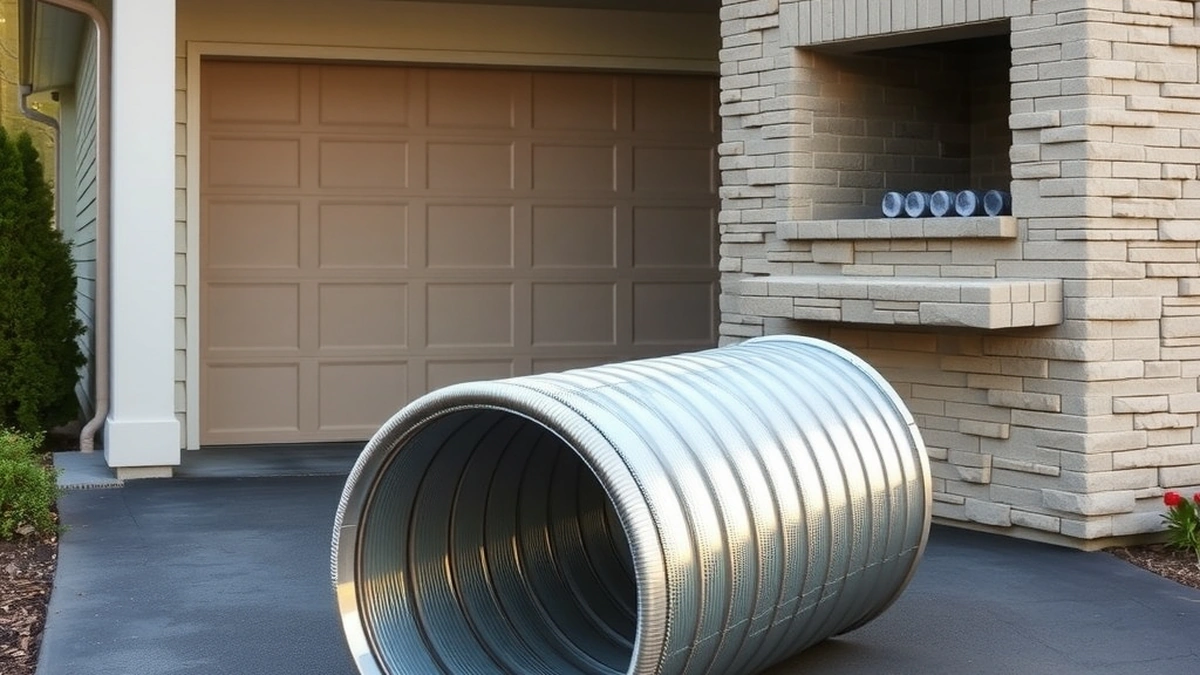
A stainless chimney liner costs $1,500 to $4,000 installed, and that is the type most relining jobs use. Clay tile runs less per foot but needs more tear-out, cast-in-place usually lands above stainless, and aluminum is for gas appliances only.
- Stainless, installed
- $1,500 - $4,000
- Inspection first
- $150 - $800
- Cap, if replaced
- $150 - $600
- Typical job length
- One to two days
Some links on this page are affiliate links.If you buy through them we may earn a commission at no extra cost to you. We do not accept payment for rankings. Read the full disclosure.
A chimney liner costs $1,500 to $4,000 installed for the stainless type that most relining jobs use. The number depends less on the metal than on the flue: how tall it is, what diameter the appliance needs, whether insulation fits, and how much of the old liner has to come out first.
Nothing below should be priced before an inspection at $150 to $800. A liner is a solution to a specific flue defect, and a quote without a look at the flue is a guess with a signature line.
What a liner does
A chimney liner is the flue inside the chimney: the corrosion-resistant passage that carries smoke and flue gases from the appliance to the outdoors and keeps them away from the masonry. Clay tile was the default for decades, and much of it is still sound. When it cracks, separates at the joints, or is the wrong size for a new appliance, the fix is a new liner rather than a new chimney.
The liner also does the draft work. A smooth, correctly sized passage holds heat in the exhaust, which keeps the column rising. A rough, oversized, or leaking flue loses that heat, and the appliance smokes, backdrafts, or builds creosote faster.
The four liner types and their price bands
| Liner type | Typical installed cost | Best suited to | Main limitation |
|---|---|---|---|
| Stainless steel | $1,500 - $4,000 | Wood, gas, oil, pellet | Needs correct alloy for the fuel |
| Clay tile | Priced into a rebuild, not a retrofit | New construction | Cannot be slipped into an existing flue |
| Cast-in-place | $100 - $250 per foot | Irregular or damaged flues | Setup cost dominates short runs |
| Aluminum | Lower than stainless | Gas appliances only | Not for wood or oil |
For a single straight flue, stainless is almost always the cheapest path to a compliant chimney because it goes in without demolition. Cast-in-place earns its price on a flue that is egg-shaped, offset, or too ragged for a flexible liner to seal against.
The per-foot arithmetic
Most relining quotes are built from height, so the per-foot number is the one to check. At the low end, $1,500 for a 25-foot flue is $1,500 / 25 = $60 per foot. At the high end, $4,000 for a 40-foot flue is $4,000 / 40 = $100 per foot.
The same $4,000 on a 25-foot flue is $160 per foot, which usually means something else is in the number: a teardown, a scaffold, an offset, or a second appliance. Ask for the liner as one line and the extras as separate lines, and the per-foot figure becomes readable.
A cap on top adds $150 to $600. A crown repair, if the crown is cracked, adds $400 to $1,500. Neither is optional in the long run; a liner under a leaking crown gets water down the annulus and fails early.
What moves the price inside the range
Height is the first driver, and diameter the second. A larger appliance needs a larger liner, and liner price scales with circumference rather than length, so a step up in diameter costs more than a few extra feet.
Insulation is the third. A wrapped liner fills the gap between the liner and the chimney wall, which keeps flue gases hot and reduces the clearance the installation needs. It adds material and time, and on an exterior chimney it is usually worth it.
Access is the fourth. A liner has to be lowered from the top or pulled from the bottom, and a chimney with a steep roof, a tight crown, or a damper frame that will not come out makes both harder. Old damper assemblies are cut out more often than homeowners expect.
Relining versus rebuilding
| Situation | Reline | Rebuild |
|---|---|---|
| Cracked or separated clay tile | $1,500 - $4,000 | $5,000 - $15,000 |
| Sound masonry, wrong flue size | Yes | No |
| Spalled brick and leaning stack | Only after the masonry is fixed | Yes |
| Missing crown and water damage | Reline after crown repair at $400 - $1,500 | If the damage reaches the stack |
Relining is the cheaper answer whenever the masonry itself is sound. It stops being the cheaper answer when the brick is spalling, the stack is leaning, or the crown has been failing for years. A liner dropped into a chimney that is falling apart is money spent on the wrong end of the problem.
What to ask for before signing
- Ask for the inspection report first, with photographs of the flue interior at the top, middle, and bottom.
- Ask which alloy is specified and why, since 304 and 316 are not interchangeable across fuels.
- Ask whether the liner will be insulated, and what that adds.
- Ask how the top is finished: top plate, cap, and how the plate is sealed to the crown.
- Ask how the bottom connects to the appliance, and whether a tee or adapter is included.
- Ask what happens if the flue cannot take the liner, and whether the deposit is refundable.
The last question separates a measured quote from a sales script. A company that has actually measured knows the flue may need ovalizing, and it will say so before it takes a deposit.
Where the quote goes wrong
Two failures account for most of the complaints. The first is an uninsulated liner in an exterior chimney, which runs cold, condenses, and builds creosote at the top. The second is a liner sized by habit rather than by the appliance’s flue collar, which produces a smoking stove and a callback.
Both are visible in the paperwork. If the quote does not name the alloy, the diameter, the insulation, and the top termination, it is not a specification. For the material comparison in depth, see stainless steel chimney liner. For the job priced out, see chimney relining cost and stainless relining cost. For the poured alternative, see cast-in-place liner cost.
Frequently asked questions
How much does a chimney liner cost?
A stainless liner installed runs $1,500 to $4,000 for most single-flue houses. The spread covers flue height, diameter, insulation, roof access, and whether the old liner has to come out.
Is a chimney liner always required?
A code-compliant flue is required for any appliance that vents into the chimney. If the existing clay tile is sound, continuous, and correctly sized, you may need only an inspection rather than a new liner.
Why is stainless more common than clay tile?
It can be installed inside an existing flue without demolishing the chimney, it resists flue gas condensate better in the right alloy, and the smooth wall improves draft. Clay tile is durable but cannot be slipped in after the fact.
Does a liner come with a warranty?
Most manufacturers offer 20 years to lifetime on 316L and 316Ti liners, with terms tied to the appliance and fuel. Read the exclusions, because burning the wrong fuel can void coverage.
Can I reline just one flue of two?
Yes. Each flue is separate, so a two-flue chimney can have one stainless liner and one sound clay flue, provided both are correctly sized for their appliances.
Does the liner price include the cap and crown?
Usually not. A cap is $150 to $600 and a crown repair is $400 to $1,500, both quoted separately. Ask for them as line items so nothing gets folded into a lump sum.
Sources
Some links are affiliate links.If you buy through them we may earn a commission at no extra cost to you. We do not accept payment for rankings. Read the full disclosure.