DIY chimney: what you can and cannot do
Sweeping, capping, and damper work are realistic homeowner jobs. Relining, crown rebuilding, and roof-height masonry are not.
You can sweep a straightforward flue, fit a cap on an accessible chimney, and replace a damper. You cannot safely install a liner, rebuild a crown, or work above a steep roofline without training and fall protection.
- Pro sweep
- $150–$400
- Cap installed
- $150–$600
- Crown repair
- $400–$1,500
- Stainless liner
- $1,500–$4,000
Some links on this page are affiliate links.If you buy through them we may earn a commission at no extra cost to you. We do not accept payment for rankings. Read the full disclosure.
You can do more chimney work yourself than most contractors will admit, and less than most homeowners assume. Cleaning a straight flue, fitting a cap, and replacing a damper are realistic weekend jobs. Relining, crown work, and anything above a steep roof are not.
The dividing line is not skill. It is consequences. A badly swept flue smells. A badly installed liner kills people.
The definition that governs everything here
DIY chimney work is maintenance performed by the homeowner on a system that carries combustion products out of the house. That framing matters because the system is a safety device, not a decoration, and the failure mode of a bad repair is fire or carbon monoxide rather than a cosmetic flaw.
Two constraints apply to every task below. Access: can you reach the work safely with the equipment you own. Competence: can you verify the result is correct after you finish. If either answer is no, the job is not a DIY job for you, regardless of what a video shows.
What you can do yourself
| Task | Realistic DIY? | Why |
|---|---|---|
| Sweeping a straight flue | Yes | Mechanical work, no code interface |
| Removing a bird nest or debris | Yes, from the bottom | Requires a vacuum and patience |
| Fitting a top-mount cap | Yes, on a walkable roof | Screws or a friction collar |
| Replacing a fireplace damper | Sometimes | Access and fit vary by firebox |
| Painting exterior masonry | Yes | Cosmetic only |
| Sealing a cap to the crown | Yes | High-temperature sealant |
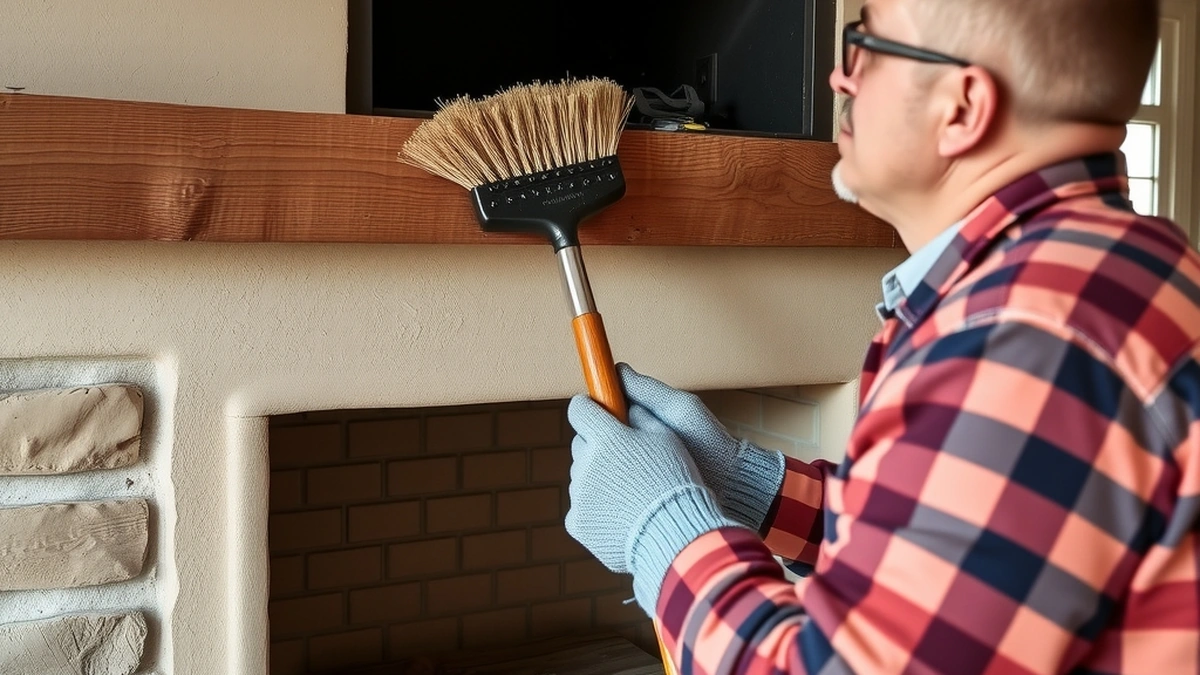
Sweeping is the classic homeowner job and the one that saves the most money over time. A professional sweep costs $150 to $400 per visit, so seven years of annual sweeping at the low end is 7 × $150 = $1,050, and at the high end 7 × $400 = $2,800. If you do it yourself competently, that is the number you are avoiding.
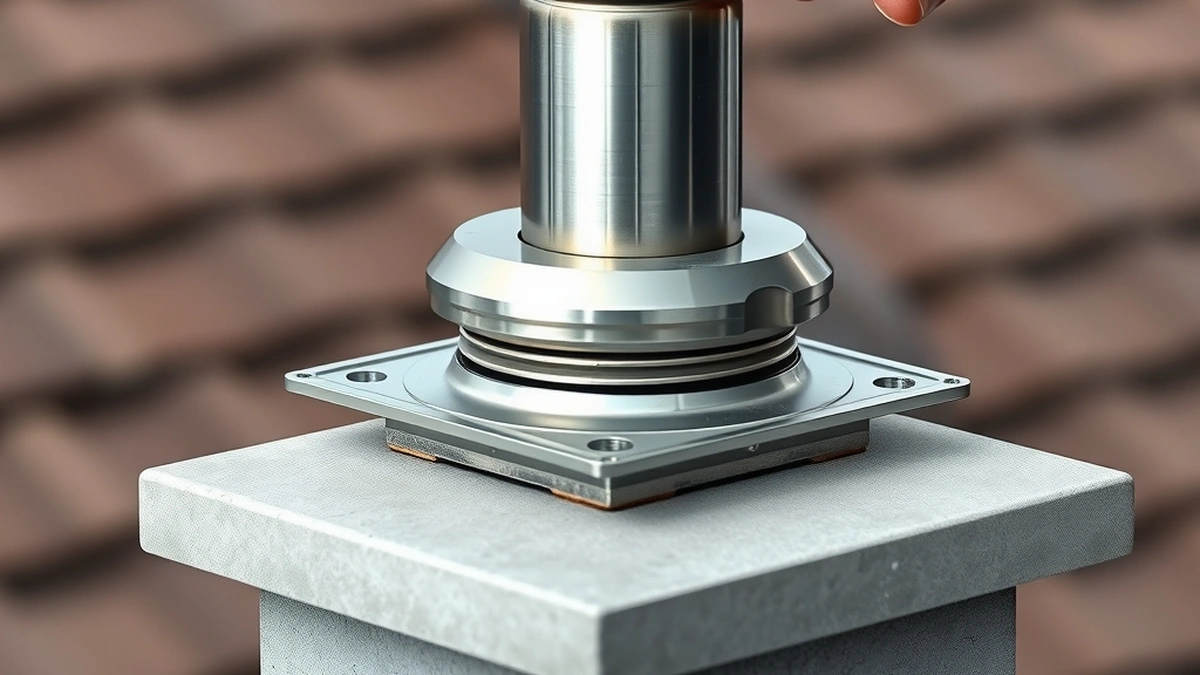
Caps are the second realistic job. A top-mount cap on a walkable roof with a sound crown is a matter of centering the unit, driving stainless screws into the flue tile or the mounting collar, and sealing the base. The cap itself and the installation together run $150 to $600 when hired out, and the labor share of that is often the smaller part.
What you should not do yourself
- Liner installation. Sizing depends on the appliance’s flue collar, the fuel, the vent height, and the manufacturer’s listing. An oversized liner cools and creosotes; an undersized one starves the appliance. A stainless liner installed by a professional is $1,500 to $4,000, and redoing a bad one costs the same again.
- Crown rebuilding. The crown needs slope, bonding, and a bond break at the flue. Patching a crown with mortar that has no slope is how cracks come back in one winter. Crown repair runs $400 to $1,500 and rebuilding a failed one badly costs more than paying for it.
- Masonry above the roofline. Repointing while standing on a roof with a grinder and a trowel is a fall hazard and a weather hazard. A partial rebuild is $5,000 to $15,000 of work for a reason.
- Gas appliance venting. Any change to a gas water heater or furnace flue requires a licensed trade in most jurisdictions and a permit in many.
- Chasing a leak. Water at the chimney is flashing, crown, or masonry, and diagnosing which one from inside the house is guesswork.
How to sweep your own flue
This is the sequence for a straight flue with a top-mounted termination. If your flue has offsets, a smoke chamber you cannot see, or a cap you cannot remove, stop and hire it out.
- Cover the firebox opening with plastic sheeting and tape the edges, leaving a small slit for the rods and a gap for the vacuum hose.
- Put on eye protection, a respirator rated for fine particulates, and gloves. Soot is a carcinogen and creosote is worse.
- From the roof, remove the cap and set it aside where it will not blow off. From inside, open the damper fully.
- Run the brush down or up the flue with steady strokes, letting the brush do the work. Work the full length three or four passes, then repeat with a second brush size if the flue changes section.
- Vacuum the firebox floor, the smoke shelf, and the cleanout, then bag the debris and remove it from the house.
- Look up the flue with a bright light before you refit the cap. Continuous liner, no missing joints, no cracks at the top three courses. If you see bare brick with mortar ledges, you have an unlined flue and a problem above your pay grade.
The roof is the real decision point
Falls are the leading cause of death in residential construction work, and OSHA requires fall protection at 6 feet and above. A one-story roof with a low pitch and a stable ladder is a different proposition from a two-story roof at 8:12 with moss on the shingles.
Judge it honestly. Can you get a ladder to a stable footing, tie it off, and keep three points of contact? Can you walk the roof without sliding when it is dry? Can you carry a brush and rods up there without a hand free? If any answer is no, the roof decides the question for you.
What a DIY mistake costs
The arithmetic is not subtle. A professional sweep at $150 to $400 is the price of the service you are replacing. A chimney fire that damages the flue leads to a liner at $1,500 to $4,000, and a fire that spreads into the framing leads to a partial rebuild at $5,000 to $15,000 plus interior repairs.
That is the trade: save $150 to $400, or accept a small chance of a $1,500 to $15,000 outcome. For most homeowners with a walkable roof and a straight flue, home sweeping is a reasonable bet. For anyone with a steep roof, an unlined flue, or a gas appliance, it is not.
When to stop and call
Call a professional if the flue is unlined or the liner is cracked, if there is glazed creosote more than 1/8 inch thick, if the crown is cracked or the cap is seized, if the appliance is gas, or if the chimney has had a fire. Those are not judgment calls.
For what a professional visit includes, see chimney vs chimney sweep and chimney maintenance. For the repair prices that follow a neglected flue, see chimney repair cost and chimney crown repair cost.
Frequently asked questions
Is it legal to sweep my own chimney?
In most US jurisdictions, yes. Homeowners may maintain their own property, though structural work and gas appliance alterations usually require a permit and a licensed trade.
Can a homeowner install a chimney liner?
Physically sometimes, safely almost never. Liner sizing, insulation, clearances, and termination must match the appliance listing, and a mistake is a fire or carbon monoxide path.
What tools do I need to sweep a chimney?
A correctly sized polypropylene brush, flexible rods, drop cloths, a shop vacuum with a fine filter, a flashlight, and eye and respiratory protection.
Is it worth sweeping my own chimney?
It can be if the flue is straight, the roof is walkable, and you are comfortable on a ladder. One professional sweep costs $150 to $400, which is the number to weigh against your time and risk.
Can I clean a chimney from inside the house?
Yes, on many fireplaces, using rods from the firebox up through an open damper. The mess is significant, so sealing the opening with plastic and tape is essential.
What DIY chimney work voids insurance?
Unpermitted structural work, unlisted liner installations, and gas appliance modifications are the common triggers. Check with your insurer before starting anything beyond cleaning.
Sources
Some links are affiliate links.If you buy through them we may earn a commission at no extra cost to you. We do not accept payment for rankings. Read the full disclosure.