How much does chimney cost?
How much does chimney cost?: practical numbers, costs, and trade-offs, written independently.
How much does chimney cost?: practical numbers, costs, and trade-offs, written independently. The guide below shows the numbers and the trade-offs.
- Typical range
- Varies by system and site
- First step
- Measure the space and confirm the load
- Professional help
- Recommended for structural or electrical work
Some links on this page are affiliate links.If you buy through them we may earn a commission at no extra cost to you. We do not accept payment for rankings. Read the full disclosure.
A chimney costs $150 to $400 to sweep, $150 to $800 to inspect, and $1,500 to $15,000 to repair or rebuild, depending on what is wrong with it. The wide range is not a pricing trick. The low end is maintenance and the high end is masonry reconstruction with a new liner. Most homeowners spend a few hundred dollars a year and a few thousand once a decade.
The four numbers that cover most chimney work
Almost every residential chimney invoice is built from the same short list. These are installed estimates for a typical US house, not quotes.
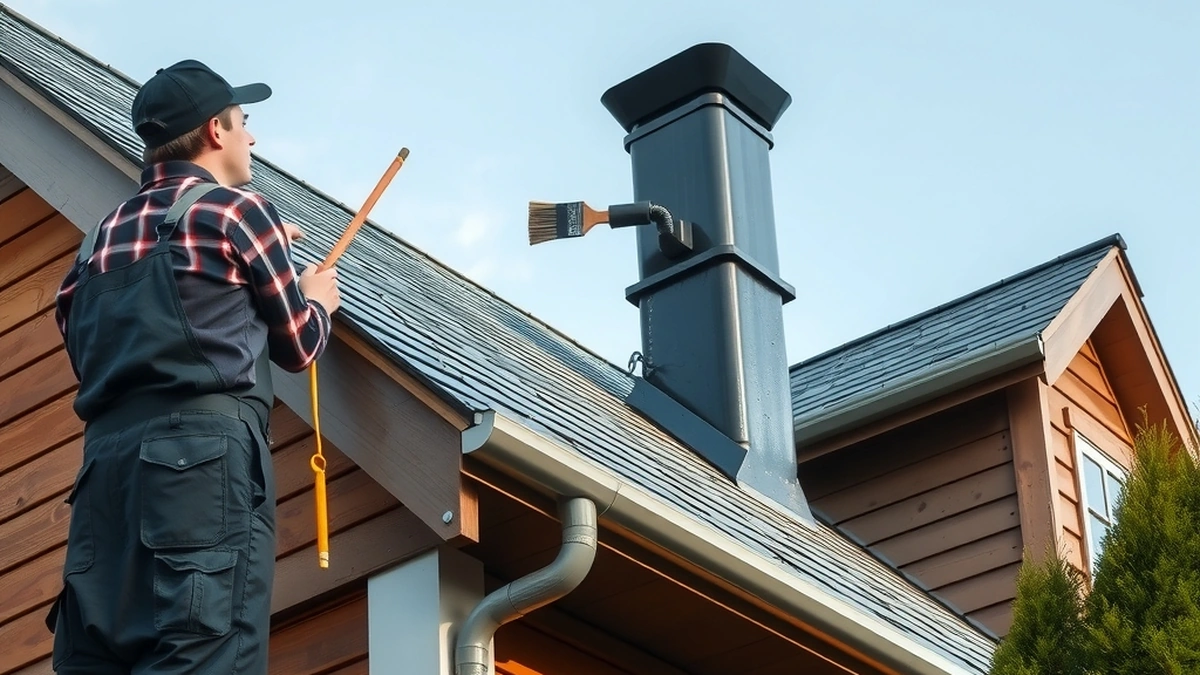
- Sweep: $150 to $400
- Inspection, Level 1 to Level 3: $150 to $800
- Cap: $150 to $600
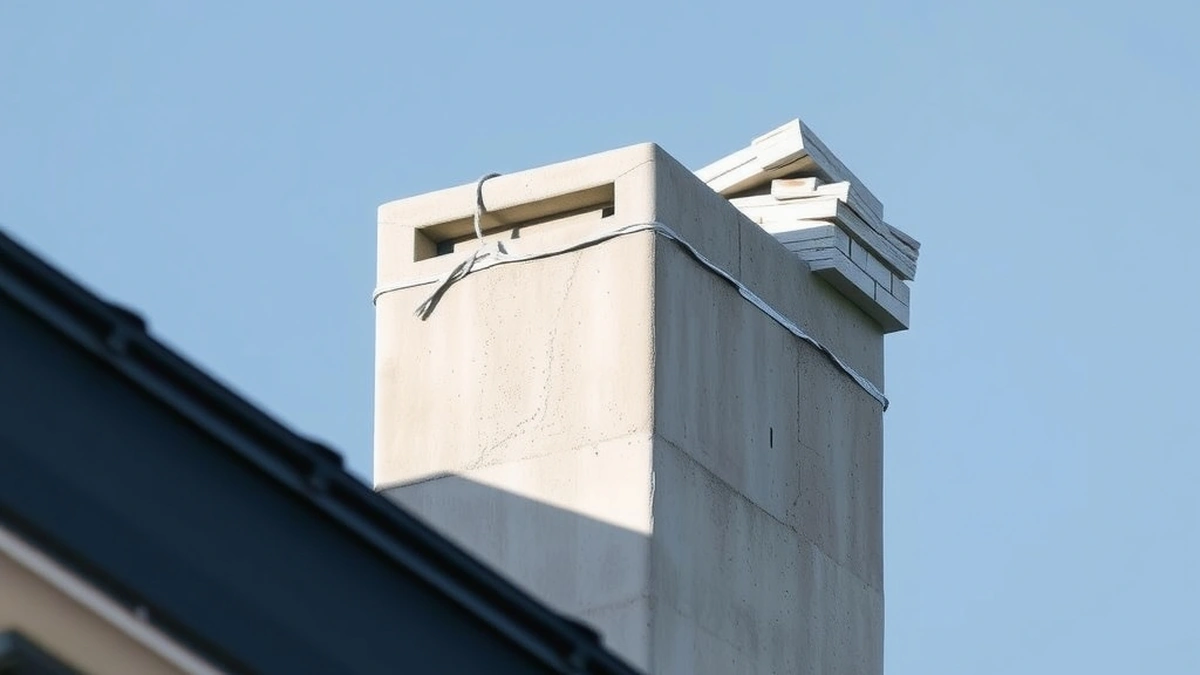
- Crown repair: $400 to $1,500
- Stainless liner: $1,500 to $4,000
- Partial rebuild: $5,000 to $15,000
Anything outside this list — a full rebuild from the foundation, a factory-built chase replacement, a fireplace insert surround — is a different scope with its own pricing. The list above covers the work most chimney calls turn into, and it is the list to hold in your head when a quote arrives.
Maintenance: the sweep and the inspection
These two lines are the annual cost of owning a chimney, and they are usually sold together.
A sweep at the midpoint of $150 to $400 is ($150 + $400) ÷ 2 = $275. An inspection at the midpoint of $150 to $800 is ($150 + $800) ÷ 2 = $475. The pair is $275 + $475 = $750.
Ten years of that routine is 10 × $750 = $7,500, which sounds like a lot until it is compared with the rebuild line. The point of the annual spend is to keep the chimney out of the repair column. A $750 visit that finds a cracked crown while it is still a $400 repair has paid for itself several times over.
Inspection levels are not the same product. A Level 1 covers the accessible parts of the chimney and appliance. A Level 2 adds a video scan of the flue and is the level required for a sale, a fuel change, or a liner installation. A Level 3 opens concealed areas and is priced accordingly, which is why the range runs to $800.
Repairs: cap, crown, and flashing
The three common repairs sit between maintenance and relining, and each is priced by what it replaces rather than by how long the technician is on the roof.
| Repair | Planning range | What drives the price |
|---|---|---|
| Cap | $150–$600 | Material, mesh, and whether a custom size is needed |
| Crown | $400–$1,500 | Patch versus full rebuild, and the condition of the brick below |
| Flashing | $220–$600 | Roof pitch, chimney width, and whether a cricket is required |
Midpoints: cap ($150 + $600) ÷ 2 = $375, crown ($400 + $1,500) ÷ 2 = $950, flashing ($220 + $600) ÷ 2 = $410. All three together is $375 + $950 + $410 = $1,735.
That is the realistic worst case for a chimney that has been ignored for a decade but is still structurally sound.
Relining: the line that scales with height
A stainless liner is priced by the foot, and the published range of $1,500 to $4,000 reflects a typical 25 ft flue.
At $60 to $160 per installed foot: 25 × $60 = $1,500 and 25 × $160 = $4,000. A 35 ft flue at the same rates is 35 × $60 = $2,100 to 35 × $160 = $5,600. A 15 ft flue is 15 × $60 = $900 to 15 × $160 = $2,400, though most installers carry a minimum that keeps small jobs near the bottom of the published band.
The number also depends on what is being lined. A wood stove needs a liner sized to its flue collar and rated for solid fuel. A furnace needs a liner rated for the appliance’s category and venting arrangement. Those are engineering decisions, not shopping decisions, and they should be made by a qualified technician who has seen the appliance and the flue.
Rebuild: when the masonry is the problem
A partial rebuild restores the chimney above the roofline: new brick, new crown, new liner, and a new cap. The planning range is $5,000 to $15,000, and the midpoint is ($5,000 + $15,000) ÷ 2 = $10,000.
Divide that by the number of sections replaced. A rebuild that replaces the top 6 ft of a stack in three sections is $10,000 ÷ 3 = $3,333 per section.
The decision point is usually the inspection report. If the brick above the roofline is spalling across a large area, if the flue cannot hold a liner, or if the crown has no sound masonry to sit on, a rebuild is the honest scope. If the damage is a cracked crown and a stained stack, it is not.
What changes the number
| Driver | Effect on price |
|---|---|
| Chimney height | More scaffold, more liner, more labor |
| Roof pitch and access | Steep or fragile roofs add labor |
| Masonry condition | Soft brick and open joints add prep |
| Liner diameter and insulation | Larger and insulated costs more |
| Appliance type | Gas, oil, and solid fuel need different ratings |
| Permit and inspection fees | Local, and usually separate |
Access is a driver homeowners underestimate.
Per-square-foot pricing vs line-item pricing
Per-square-foot pricing and line-item pricing measure different things. Chimney work is sometimes quoted per square foot of masonry face, but the rate is not comparable across scopes. A crown at $400 to $1,500 covers the top surface and the flue opening. A rebuild at $5,000 to $15,000 covers the whole stack. Dividing both by the same square footage produces two numbers that mean different things.
Use per-square-foot rates for masonry comparison and use the line-item ranges for budgeting. A quote that mixes them is hard to check.
How to budget for a chimney
- Set aside $750 a year for the sweep and inspection, based on the midpoints above.
- Ask for the inspection report in writing, with photographs and the flue size in inches.
- Price the repairs the report actually names, using the ranges in this guide.
- Get two quotes on the same scope, not two quotes on two different scopes.
- Hold a contingency of about 20 percent for what the inspection finds once the flue is open.
- If the total passes $5,000, ask whether a rebuild is the better long-term buy than a stack of repairs.
That last question is the one that decides most large chimney budgets. Three repairs at $1,700 each over ten years is $5,100, which is the bottom of the rebuild range. At some point the repairs stop being cheaper.
For the repair line items in detail, see chimney repair cost. For the annual service, see chimney sweep cost and chimney inspection cost. For the rebuild comparison, see chimney rebuild cost, and for the per-square-foot view, see chimney cost per square foot.
Frequently asked questions
What is the most important measurement?
Start with the ceiling or clearance number; it decides which systems can fit.
What does a typical project cost?
Costs vary by system and site access; the guide shows the line items and a planning range.
Can I install this myself?
Some tasks are DIY-friendly, but structural, electrical, and load-bearing work should be done by a licensed professional.
How long does installation take?
A simple setup is a weekend; a full build with electrical or structural work can take several weeks.
What should I check before buying?
Confirm dimensions, load ratings, and the manufacturer's installation requirements for your exact model.
Where can I find local help?
Ask a licensed contractor or installer who has worked with the same system and can inspect your site.
Sources
Some links are affiliate links.If you buy through them we may earn a commission at no extra cost to you. We do not accept payment for rankings. Read the full disclosure.