Chimney rebuild cost: $5,000 to $15,000, itemized
What a partial or full chimney rebuild includes, the per-foot arithmetic behind the range, and the findings that decide between rebuilding and relining.
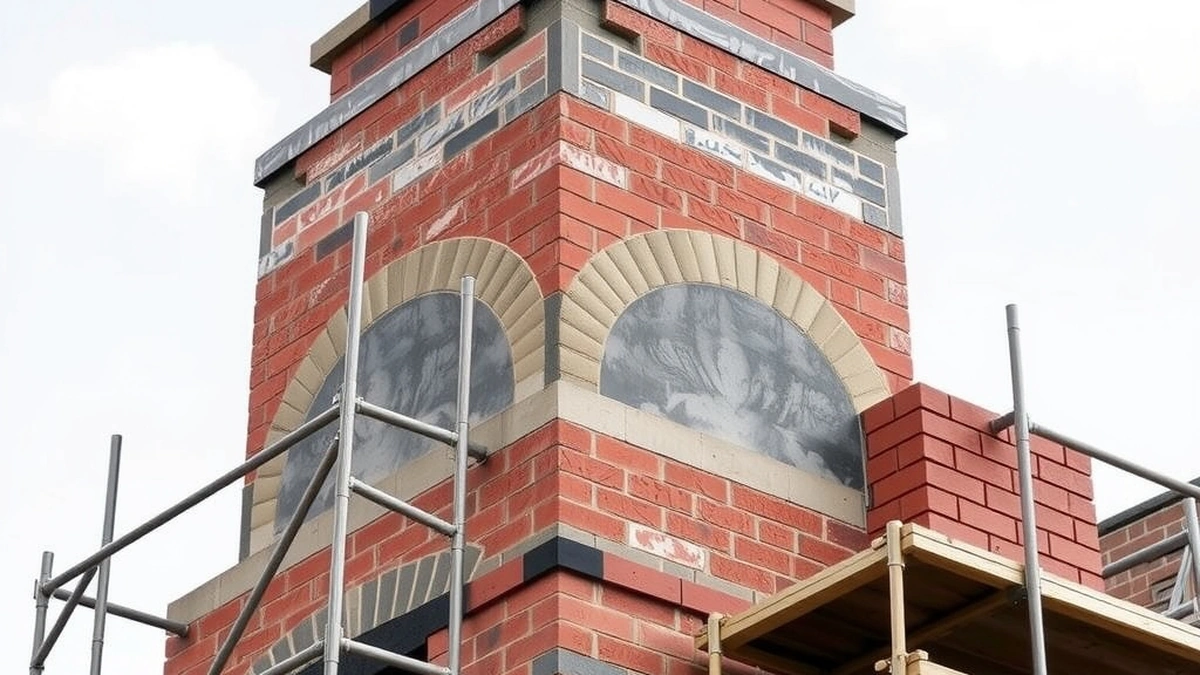
A chimney rebuild costs $5,000 to $15,000 for the portion above the roof line, including teardown, new masonry, a crown, and usually a liner. A full rebuild from the foundation runs higher, and a reline at $1,500 to $4,000 is the cheaper answer when the masonry is sound.
- Partial rebuild
- $5,000 - $15,000
- Per foot above roof
- $600 - $1,000
- Liner, usually added
- $1,500 - $4,000
- Inspection first
- $150 - $800
Some links on this page are affiliate links.If you buy through them we may earn a commission at no extra cost to you. We do not accept payment for rankings. Read the full disclosure.
A chimney rebuild costs $5,000 to $15,000 for the section above the roof line. That figure covers tearing the old stack down to sound masonry, rebuilding it in matching brick, forming a new crown, and disposing of the debris. A liner at $1,500 to $4,000 is usually added, and a rebuild that runs from the foundation costs more than the top-of-stack range.
The word “rebuild” hides a large spread. Rebuilding the top four courses is a different job from rebuilding twenty feet and two flues, and both get called a rebuild on an estimate.
Partial versus full rebuild
A partial rebuild replaces the chimney from the roof line up, or from a sound course below the failure to the top. It is the common job, because that is where the weather hits: the stack above the roof takes rain on four faces, freezes on all of them, and has no heated building around it.
A full rebuild takes the chimney down to the foundation and starts over, which is required when the failure runs through the structure: a separated stack, a chimney pulling away from the house, or brick that is soft from the ground up. That job involves interior demolition, framing repairs, and a new foundation, and it is priced by the project rather than by the foot.
What the price is made of
| Line item | What it covers | Rough share |
|---|---|---|
| Scaffolding and access | Staging, roof protection, fall protection | Setup is fixed, so it looms large on small jobs |
| Demolition | Removing brick, mortar, and old tile | Rises with height |
| Masonry | New brick, mortar, and labor | The largest material line |
| Crown | Formed concrete top with a slope | $400 - $1,500 |
| Liner | New flue liner, usually stainless | $1,500 - $4,000 |
| Cap and flashing | Top termination and roof seal | $150 - $600 for the cap |
| Disposal | Dumpster and haul-off | One load for most jobs |
Access is the line homeowners question and cannot avoid. A chimney on a steep roof with a valley below it needs staging that costs the same whether the stack is four feet tall or ten.
The per-foot arithmetic
Divide the total by the height above the roof and the range becomes readable. At the bottom, $5,000 for an 8-foot stack is $5,000 / 8 = $625 per foot. At the top, $15,000 for a 20-foot stack with two flues is $15,000 / 20 = $750 per foot.
The per-foot rate rises when the job includes a second flue, a complex crown, or a liner, and falls on a simple single-flue stack with good access. A 6-foot stack rebuilt with a liner might total $5,000 + $1,500 = $6,500, while a 20-foot two-flue rebuild with two liners might total $15,000 + $4,000 + $4,000 = $23,000. That last number is why owners of large chimneys sometimes cap a flue and stop using it.
A repair instead of a rebuild is often $400 to $1,500 for a crown, plus repointing. The gap between $1,500 and $15,000 is the cost of waiting.
What pushes a job to the top
Four conditions move a rebuild from the bottom to the top of the range. A second flue is the first, because each flue means another liner, another termination, and more masonry. Complex brickwork is the second: a corbelled cap, a decorative band, or a curved stack takes more time than a plain rectangle.
The third is height and access. A chimney on a three-story house needs more scaffold, more hoisting, and more days. The fourth is hidden damage: a rotted roof deck, a rusted flashing pan, or framing that has been wet for years, all of which are found after the stack comes down and billed as extras.
Ask what the quote excludes before signing. “Additional framing if required” is the clause that turns a $9,000 job into a $13,000 one.
Rebuild versus reline
| Condition | Reline at $1,500 - $4,000 | Rebuild at $5,000 - $15,000 |
|---|---|---|
| Cracked clay tile, sound brick | Correct fix | Unnecessary |
| Spalled brick above the roof | Fails again | Correct fix |
| Crown cracked, brick sound | Crown at $400 - $1,500, then reline | Unnecessary |
| Stack leaning or separated | No | Engineer, then rebuild |
| Missing liner, older chimney | Usually | Only if masonry is soft |
The decision turns on the brick, not the flue. A liner is a new flue inside an old chimney, and it cannot hold a wall together. If a mason can push a screwdriver into the brick, the chimney is done.
The rebuild sequence
- Inspect the chimney and the roof, and get the scope in writing with photographs of the failed courses.
- Set scaffolding and protect the roof surface below the work.
- Demolish down to sound masonry, and assess what is exposed before rebuilding.
- Rebuild the stack in matched brick with joints sized to the original.
- Form the crown with a slope away from the flue, and cut in a flashing reglet.
- Install the liner and cap, then seal the flashing and test the appliance.
- Cure the mortar before the first fire, and keep water off the new crown.
Step three is where the surprises live. A stack that looks sound from the ground can have a cracked inner wythe, and that is a scope change rather than a mistake.
Avoiding the second bill
Two habits prevent most repeat work. The first is insisting on a crown with a slope and an overhang rather than a flat concrete pad, because the flat pad is what failed the first time. The second is installing a cap at $150 to $600, which keeps water and animals out of the flue the rebuild just paid for.
The third is the liner. A rebuild that reuses old tile is a rebuild with a known weak point, and the tile rarely survives the demolition intact anyway.
For the repair options below a rebuild, see chimney masonry repair and chimney crown repair cost. For the liner that goes with it, see chimney relining cost. For the inspection that should precede a quote, see chimney inspection cost.
Frequently asked questions
How much does a chimney rebuild cost?
Between $5,000 and $15,000 for a partial rebuild of the section above the roof. That covers demolition, new brick and mortar, a crown, and scaffolding. A full rebuild from the foundation costs more.
What is the difference between a rebuild and a reline?
A reline replaces the flue inside a sound chimney at $1,500 to $4,000. A rebuild replaces the masonry structure itself. If the brick is spalling or the stack is moving, a liner will not fix it.
Why is a chimney rebuild so expensive?
It is masonry work at height. Scaffolding, demolition, disposal, and hand-laying brick on a roof all cost more than the same work at ground level, and the crew cannot leave the chimney open overnight.
Does a rebuild include a new liner?
Usually it should. Opening the stack disturbs the clay tile, and a new liner at $1,500 to $4,000 is cheaper than rebuilding twice. Confirm it is in the scope rather than assumed.
How long does a chimney rebuild take?
Three to seven working days for a partial rebuild, depending on weather and cure time. Mortar needs to set before the crown goes on, and rain stops the work.
Can I rebuild just the top few courses?
Yes, if the failure is limited to the top. Rebuilding the top three to five courses and recrowning is often the low end of the range, and it is the right call when the brick below is sound.
Sources
Some links are affiliate links.If you buy through them we may earn a commission at no extra cost to you. We do not accept payment for rankings. Read the full disclosure.