Stainless relining vs stainless relining: two bids
Two stainless relining quotes can describe different jobs at the same price. Here is how to compare alloy, wall thickness, sizing, and termination line by line.
Stainless relining vs stainless relining usually means two stainless quotes for the same chimney. They differ in alloy, wall thickness, insulation, sizing, and termination, and those differences decide whether the liner lasts 12 years or 25.
- Installed range
- $1,500–$4,000
- Spread between two bids
- Often 30–60 percent
- Inspection before bidding
- $150–$800
- Cap and termination
- $150–$600
Some links on this page are affiliate links.If you buy through them we may earn a commission at no extra cost to you. We do not accept payment for rankings. Read the full disclosure.
Stainless relining versus stainless relining sounds like a comparison with no second side, and in a way it is: the phrase describes two stainless relining quotes for the same chimney. Both say “stainless liner” on the estimate and both land somewhere in the $1,500–$4,000 installed range, yet the work behind the number can differ by a decade of service life. The comparison that matters is line by line, not brand against brand.
Why the same service produces different quotes
A stainless relining quote is a bundle. It contains an alloy grade, a wall thickness, a diameter, a length, an insulation decision, a top plate, a cap, a labor estimate, and a warranty. Two contractors can write the same total and mean entirely different bundles.
The most common gap is the inspection. A Level 1 or Level 2 inspection runs $150–$800, and a company that skips it is quoting blind. That is not necessarily a scam; it is a bid with the discovery risk moved to the day of installation, which is exactly when the price goes up.
Flexible versus rigid: the real fork in the road
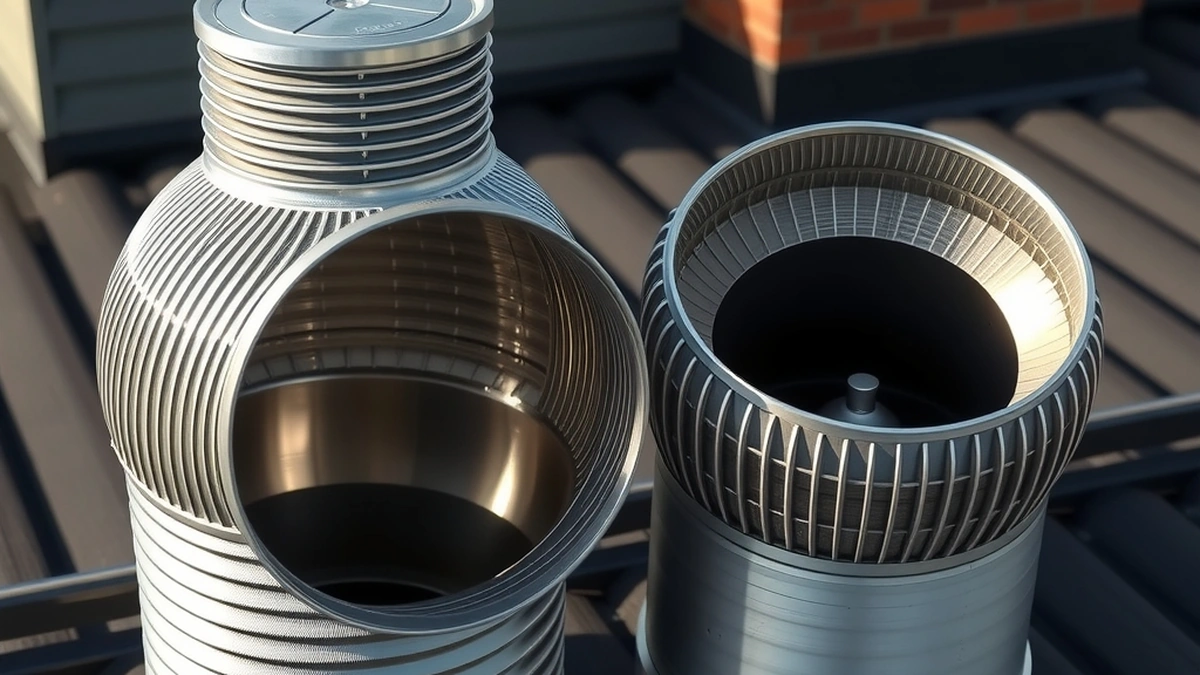
Flexible stainless is corrugated and bends around offsets, corbels, and dampers. Rigid stainless is smooth-walled and straight. Both are legitimate, and the chimney decides which one fits.
| Feature | Flexible stainless | Rigid stainless |
|---|---|---|
| Fits offsets and bends | Yes | No |
| Draft performance | Good, slightly higher resistance | Better, smoother bore |
| Typical use | Masonry chimney, retrofits | Straight runs, wood appliances, new construction |
| Installation time | Faster | Slower, sectional |
| Repair access | Replace the run | Replace a section |
| Best when | The flue jogs | The flue is plumb and straight |
A flexible liner crushed into a 90-degree turn loses cross-section and draft. A rigid liner forced into a chimney with a jog will not go in at all. Whoever quotes you should be able to say which one your flue needs and why, in one sentence, without looking it up.
Alloy and wall thickness: where quotes quietly diverge
Alloy grade is the first hidden variable. Type 304 is the baseline stainless, adequate for some gas venting. Type 316 and 316L resist chlorides and higher temperatures better, and most wood appliance installations specify 316L or a higher-temperature alloy. Specialty alloys exist for coal and high-heat applications.
Wall thickness is the second. Liners are commonly sold in the 0.005 to 0.010 inch range, and thicker is more durable. A quote that names neither grade nor thickness is not a quote for a liner; it is a quote for the idea of one.
Ask for both in writing, and check them against the appliance manual. If the manual says 316L at 0.006 inch minimum, a 304 liner at 0.005 inch is out of compliance even if it fits perfectly.
Sizing decides draft, and the quote rarely shows it
Liner diameter should match the appliance flue collar unless a professional calculates otherwise. Too small and the appliance starves for air and spills smoke. Too large and the flue runs cold, which builds creosote in wood systems and condenses moisture in gas systems.
This is where cheap bids hide. A 6-inch liner costs less than an 8-inch liner, so a bid that quietly downsizes the diameter looks competitive. The installed price still sits inside $1,500–$4,000, and the homeowner finds out on the first cold night when the stove will not draw.
Termination and the cap line item
The top of the job is a top plate, a storm collar, and a cap. A chimney cap runs $150–$600 and does two jobs: it keeps rain and animals out, and it sets the termination height above the roofline. Skipping it saves the contractor a few hundred dollars and costs you a rusted liner in five years.
Compare the termination on both quotes. If one lists a stainless cap with a mesh screen and the other lists nothing, the second bid is not cheaper. It is incomplete.
Insulation belongs on the same page. A wrapped liner keeps flue gas above the condensation point, which matters most on an exterior chimney where the flue runs against cold masonry for 20 feet or more. Uninsulated stainless in that position can sweat through a heating season, and the corrosion shows up at the seams first. If one bid includes a half-inch insulation wrap and the other does not, the two numbers are not describing the same installation.
How to compare two bids on one page
- Write both quotes into a table with identical rows: alloy, wall thickness, diameter, length, insulation, top plate, cap, inspection, warranty.
- Circle every row where one bid says nothing. Silence is a cost, not a discount.
- Confirm both companies inspected the same flue, at the same level, on the same day conditions.
- Check the liner length against the actual chimney height. A 25-foot flue needs 25 feet plus termination.
- Ask each company what happens if the flue is found to be out of round or blocked mid-install.
- Ask for the manufacturer warranty document and the labor warranty term separately.
Then read the pattern in public feedback — stainless relining reviews explains which complaints are worth weighting — and use stainless steel chimney liner as your baseline for what a complete scope looks like.
When stainless relining loses to the alternative
Stainless is not always the answer. A flue that is badly out of round, heavily spalled, or riddled with failed joints may need a cast-in-place liner instead, because a cast liner forms to the existing shape. That trade-off is set out in cast-in-place liner vs stainless relining, and the sizing consequences for a wood appliance are covered in chimney liner for wood stove.
The practical rule: if two stainless bids differ by more than the cost of an inspection, the difference is usually scope, not margin. Get the scope in writing and the comparison answers itself.
Frequently asked questions
Why do two stainless relining quotes differ so much?
Different alloy grades, different wall thickness, and whether insulation and a new top plate are included. A quote can also skip the inspection, which shifts discovery costs to the day of the job.
Is flexible or rigid stainless better?
Flexible suits masonry chimneys with offsets and short bends. Rigid is smoother and better for straight runs and wood appliances, but it cannot follow a corbel or a jog in the flue.
What alloy should a wood stove liner use?
Most wood appliance liners use 316L or a higher-temperature alloy. Basic 304 is common for some gas applications. The appliance listing and the manufacturer's instructions decide, not the price.
Does wall thickness matter on a chimney liner?
Yes. Thicker walls resist corrosion and mechanical damage longer, and some appliance listings require a specific minimum. Ask for the thickness in thousandths of an inch in writing.
Should insulation be included in the quote?
For an exterior masonry chimney, usually yes. Wrapped insulation keeps flue gases warm, reduces creosote condensation, and improves draft. Ask whether it is in the price or an add-on.
How do I compare two relining bids fairly?
Put both on one page with the same eight lines: alloy, thickness, diameter, length, insulation, termination, inspection, and warranty. Then compare the totals, not the headline price.
Sources
Some links are affiliate links.If you buy through them we may earn a commission at no extra cost to you. We do not accept payment for rankings. Read the full disclosure.