How long does a chimney last? Life by type
Masonry chimneys last 50 to 100 years, factory-built ones 20 to 30, and liners 15 to 25. What ends a chimney early is water, and it is almost always.
A masonry chimney lasts 50 to 100 years, a factory-built chimney 20 to 30, a stainless liner 15 to 25, and a crown 15 to 25. Water intrusion, not fire, is what ends most chimneys early.
- Masonry chimney
- 50–100 years
- Factory-built chimney
- 20–30 years
- Stainless liner
- 15–25 years
- Crown
- 15–25 years
Some links on this page are affiliate links.If you buy through them we may earn a commission at no extra cost to you. We do not accept payment for rankings. Read the full disclosure.
A brick chimney in decent repair lasts 50 to 100 years. A factory-built chimney lasts 20 to 30. A stainless liner lasts 15 to 25, and a concrete crown lasts about as long. The number that actually decides which end of those ranges you get is not fire exposure. It is water.
These are estimates drawn from material behavior and trade experience rather than measured field data, and your chimney’s exposure, construction, and maintenance history will move them.
What “lasting” means for a chimney
A chimney lasts as long as it keeps doing three things: containing combustion gases, keeping water out of the masonry, and standing up structurally. Those three fail independently, which is why a 90-year-old chimney can be perfectly serviceable while a 25-year-old one is scrap.
This is also why “how long does a chimney last” has no single answer. The structure might outlive the liner by decades, and the liner might outlive the crown. When someone says a chimney is at the end of its life, ask which of the three stopped working.
Service life by component
| Component | Typical life | What ends it |
|---|---|---|
| Brick masonry stack | 50–100 years | Frost damage from water saturation |
| Stone masonry stack | 75–100+ years | Mortar erosion, settlement |
| Factory-built metal chimney | 20–30 years | Corrosion, failed joints, obsolete parts |
| Clay tile liner | 20–50 years | Thermal shock cracking, mortar joint failure |
| Stainless liner | 15–25 years | Corrosion from unburned chlorides, abrasion |
| Cast-in-place liner | 30–50 years | Cracking at the top, spalling |
| Concrete crown | 15–25 years | Shrinkage cracks, no overhang, no bond break |
| Galvanized cap | 5–10 years | Rust-through at the mesh |
| Stainless cap | 15–25 years | Weld failure, fastener corrosion |
| Copper cap | 30+ years | Almost nothing, at a price |
Read the table as a maintenance calendar. The cap is the part you will replace most often and the cheapest at $150 to $600 installed. The liner is the part that matters most and costs $1,500 to $4,000. The crown sits between them at $400 to $1,500.
What shortens a chimney’s life
No cap. This is the single biggest cause of premature masonry death. Rain down an open flue soaks the crown, the flue tile, and the inner wythe of brick. Every freeze after that expands the water and spalls the face. A chimney built in 1950 without a cap is often in worse shape than one built in 1980 with a stainless cap.
A crown that does not shed water. A crown needs slope away from the flue and a bond break so it can move independently. Flat crowns and crowns bonded rigidly to the flue crack within a decade, and the crack runs water straight into the stack.
Clay tile liners in modern appliances. A tile flue sized for an open fireplace is far too large for a wood stove or a furnace. The gases cool, condense, and the moisture plus acidic condensate eats the mortar joints between tiles. This is why relining is so common in houses that switched appliances without changing the flue.
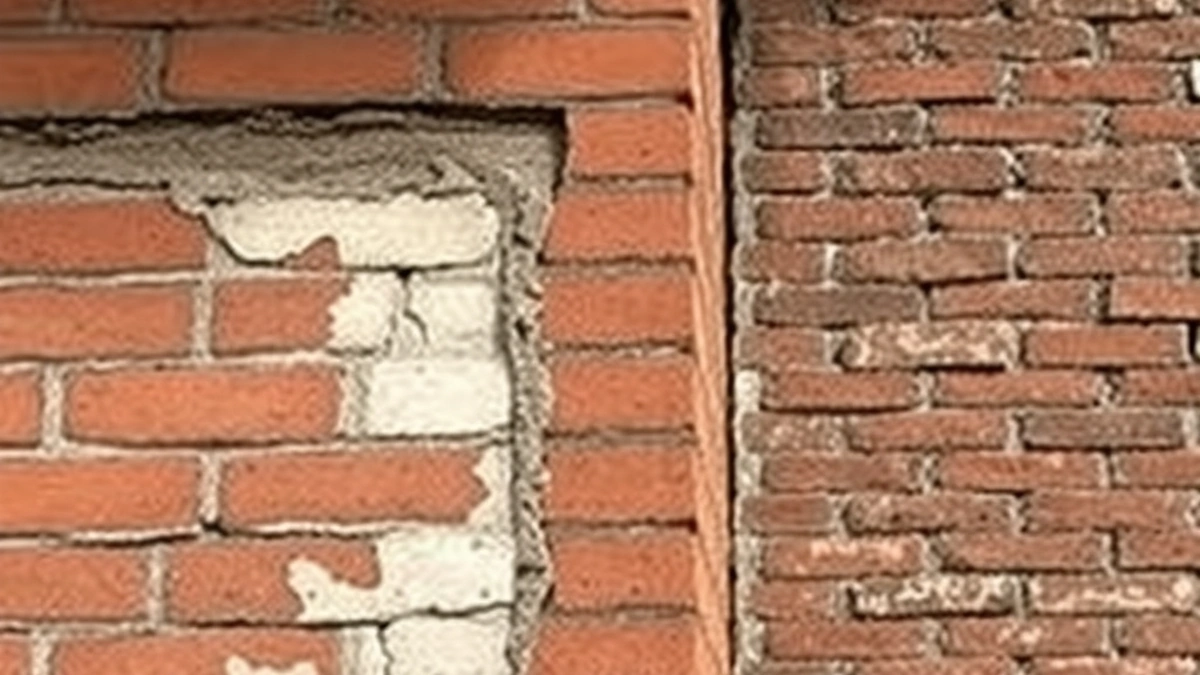
Deferred repointing. Mortar is the sacrificial layer. Once joints recede past about 1/4 inch, water sits in them and the freeze-thaw cycle starts working on the brick itself. Repointing early is cheap; rebuilding after the brick face goes is not.
Burning unseasoned wood. Wet wood sends more water vapor and more creosote up the flue. The water condenses on the liner, and the creosote is fuel for the fire that ends the chimney’s career.
Repair or rebuild: the arithmetic
Here is the honest comparison. Take a chimney that needs a liner, a crown, and repointing above the roofline.
The repair path: liner at $1,500 to $4,000, crown at $400 to $1,500, and a cap at $150 to $600. That totals $2,050 to $6,100.
The rebuild path: a partial rebuild at $5,000 to $15,000, and in most cases a new liner still goes inside it, so add $1,500 to $4,000. Total $6,500 to $19,000.
The repair path wins unless the masonry itself is failing. If the brick faces are spalling across more than a small patch, or the stack is leaning, or the mortar has lost bond in the inner wythe where you cannot see it, the repair money buys years rather than decades and the rebuild is the better spend.
How to estimate remaining life
- Look at the crown from the ground with binoculars. Cracks, a flat top, or moss growing in the joint means water is already getting in.
- Check the mortar joints on the stack. Sound joints are full and slightly proud. Recessed, sandy, or missing joints mean repointing is due now.
- Look for spalled brick faces: the front of the brick has popped off, leaving a soft, crumbly core. A few is repairable; a field of them is not.
- Have the flue examined inside. An inspector looks for cracked tiles, missing joints, gaps at the top three courses, and evidence the liner was never there.
- Ask for the appliance history. A flue that once served an open fireplace and now serves a stove is almost certainly oversized.
- Price the findings against the two paths above and decide with both numbers in front of you.
For the component costs, see chimney repair cost and types of chimney, which explains how construction type sets the ceiling on service life. Water entry diagnosis is covered in chimney leak repair.
What maintenance actually buys
Twenty years of annual sweeping and inspection at $300 to $1,200 a year costs $6,000 to $24,000. That is inside the range of a single partial rebuild, which sounds like a bad deal until you notice what the two paths deliver: the maintenance path includes twenty years of usable fireplace, and the rebuild path includes a month of disruption, a torn-up roof, and interior repairs.
The real argument for maintenance is narrower and more useful. It keeps the chimney in the top half of its material lifespan, it catches liner failures before they become house fires, and it preserves the resale value of a feature buyers do notice. The money argument is a wash; the safety argument is not.
For the routine itself, see chimney maintenance. For what a failed liner looks like from the inside, see stainless steel chimney liner.
Frequently asked questions
How long does a brick chimney last?
Fifty to 100 years is the usual estimate for a sound brick chimney with a proper crown and cap. Chimneys that never got a cap often fall apart in 40 to 60 years instead.
How long does a factory-built chimney last?
Twenty to 30 years is typical for a listed prefabricated chimney. Its life is set by the manufacturer listing, and when it fails you replace components or the whole run rather than rebuilding it.
When should a chimney be replaced rather than repaired?
When the liner, crown, and masonry all need work at once, or when the stack is leaning or losing bond. At that point the combined repair bill approaches a rebuild, which runs $5,000 to $15,000.
Does a stainless steel liner last longer than a clay tile liner?
Usually yes for wood and gas appliances. A properly insulated stainless liner typically lasts 15 to 25 years, while clay tile can last 20 to 50 but cracks under thermal shock and is hard to repair.
Can a chimney last forever with maintenance?
No, but maintenance gets a chimney close to its material limit. Repointing, a sound crown, and a cap are what separate a 90-year-old chimney from a 45-year-old ruin.
How do I know how old my chimney is?
Look at the brick size and bond, the liner type, and the crown material. An inspector can usually date the stack from those details and from the mortar profile.
Sources
Some links are affiliate links.If you buy through them we may earn a commission at no extra cost to you. We do not accept payment for rankings. Read the full disclosure.