Chimney relining cost: line items and real totals
A relining quote broken into its line items, the per-foot math behind $1,500 to $4,000, and the flue conditions that push a job past the range.
Chimney relining costs $1,500 to $4,000 for a stainless liner on a single flue, which covers the liner, insulation, top plate, and connection at the appliance. Offsets, tear-out, height above 35 feet, and a second flue each add to the number.
- Single flue reline
- $1,500 - $4,000
- Per linear foot
- $60 - $100
- Insulation wrap
- Usually included in the range
- Inspection before quoting
- $150 - $800
Some links on this page are affiliate links.If you buy through them we may earn a commission at no extra cost to you. We do not accept payment for rankings. Read the full disclosure.
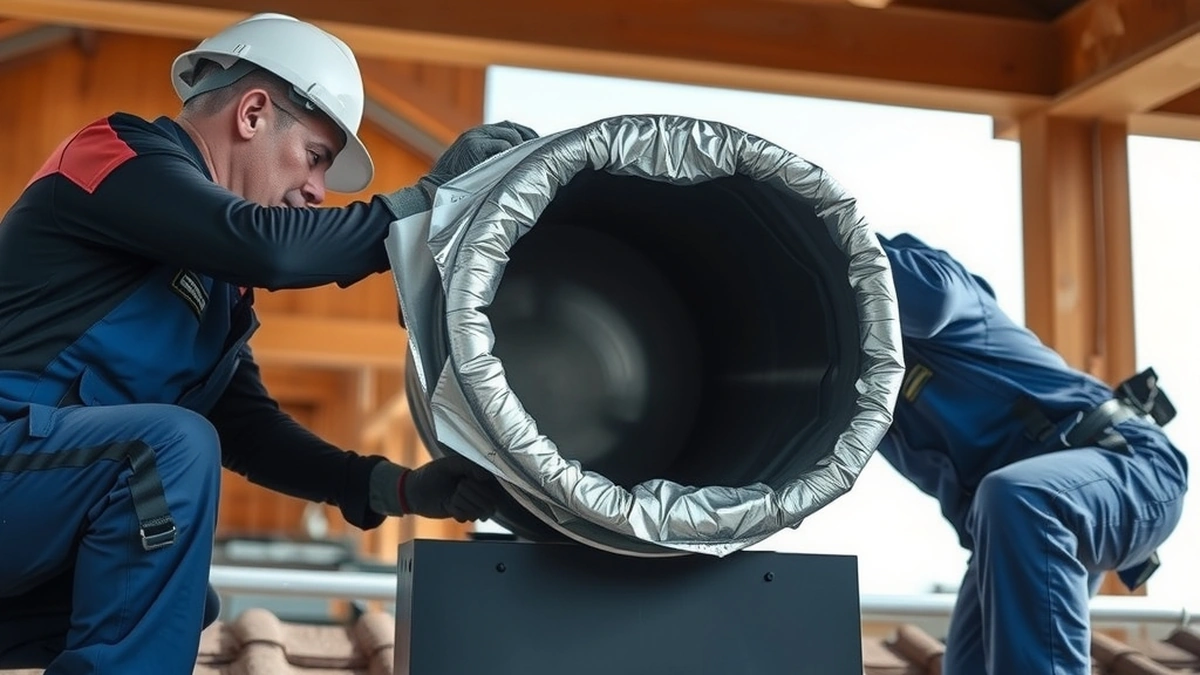
Chimney relining costs $1,500 to $4,000 for a stainless liner on a single flue, installed. The price covers a liner sized to the appliance, an insulation wrap, a top plate sealed to the crown, and a connection at the bottom. What sits outside that number is the work that has to happen before the liner can go in.
Relining and “installing a liner” are the same job described from different ends. Relining implies an existing chimney that is being brought back into service, and that is usually where the surprises are.
What the word covers
Chimney relining is the installation of a new flue liner inside an existing chimney so the appliance has a continuous, correctly sized, corrosion-resistant passage to the outdoors. It is a retrofit, not new construction, which is why the condition of the old flue drives the price more than the material does.
A chimney that already has sound, correctly sized clay tile does not need relining. It needs an inspection at $150 to $800 to confirm the tile is continuous and the joints are tight. Relining is the answer when the tile is cracked, gaps at the joints, or is the wrong size for the appliance being connected.
What is inside the quote
| Line item | What it is | Share of a typical job |
|---|---|---|
| Liner | Flexible or rigid stainless, sized to the appliance | Largest single line |
| Insulation | Wrap or blanket around the liner | Material plus an hour |
| Top plate and cap | Seals the top, keeps water and animals out | $150 - $600 if a cap is added |
| Appliance adapter | Connects liner to the flue collar or insert | Small, but often missed |
| Labor and access | Roof work, damper removal, scaffold | Rises with difficulty |
| Disposal | Old damper, tile, or debris | Small unless there is a teardown |
A quote that lists these separately can be checked against a second quote line by line. A single lump sum cannot, which is why the lump sums are the ones that drift.
Height, diameter, and the per-foot math
The range is easiest to read as a per-foot rate. At the bottom, $1,500 for a 25-foot flue is $1,500 / 25 = $60 per foot. At the top, $4,000 for a 40-foot flue is $4,000 / 40 = $100 per foot.
Height alone does not explain the second figure. A 40-foot run needs more liner, more insulation, and more labor at the roof, and it often needs a scaffold rather than a ladder. Diameter matters as well, because liner cost scales with circumference: an 8-inch liner uses noticeably more metal per foot than a 6-inch one, and the price step is larger than most homeowners expect.
Two flues relined on one visit usually cost less than 2 x the single price, because mobilization and scaffold are shared. Budget the pair at the single-flue range plus most of a second, and treat anything at a full double as a quote worth questioning.
Insulated versus uninsulated
| Setup | Effect on draft | Effect on price | Where it belongs |
|---|---|---|---|
| Uninsulated liner | Loses heat, slower warm-up | Lowest | Interior chimneys with tight clearance |
| Wrapped liner | Holds heat, less creosote | Adds material and time | Exterior chimneys, cold climates |
| Blanket insulation | Best heat retention | Highest material cost | Oversized flue cavities, long runs |
An exterior chimney is a cold column in January. An uninsulated liner inside it struggles to warm up, the flue gas condenses on the metal, and the result is creosote at the top and corrosion at the bottom. The wrap is not an upsell on those chimneys; it is the difference between a liner that lasts and one that fails early.
When the job leaves the range
Four conditions reliably push a reline past $4,000. The first is an offset flue, where the chimney jogs and a straight liner will not pass, so the liner has to be ovalized or the offset broken out. The second is a damper frame that will not come out, which means cutting masonry at the smoke chamber.
The third is a teardown at the top: a crown that has to be rebuilt at $400 to $1,500 before the top plate can seal, or a stack that is too short to terminate the liner correctly. The fourth is a second appliance. A furnace and a fireplace on the same chimney are two liners, two top plates, and two connections, and the price roughly doubles.
Reline or rebuild
| Condition | Reline | Rebuild |
|---|---|---|
| Cracked tile, sound brick | $1,500 - $4,000 | Not needed |
| Spalled brick above the roof | Reline after masonry repair | $5,000 - $15,000 |
| Leaning or separated stack | No | Engineer first |
| No liner at all, older house | Yes | No |
The decision rule is simple. If the brick and mortar are sound and the only failure is the flue, reline. If the structure is failing, a liner is a new flue inside a dying chimney, and the money is better spent on the stack.
What to put in writing
- State the appliance, its fuel, and its flue collar diameter so the liner size can be checked.
- State the alloy: 304 for some wood and most gas, 316L or 316Ti for oil, coal, and long-term wood use.
- State whether insulation is included, and which type.
- State the top termination: plate, cap, and how the plate is sealed.
- State the bottom connection and whether an adapter or tee is included.
- State who repairs the crown if the top plate cannot seal, and at what price.
Six lines on a page turn a relining quote into a specification, and a specification is the only thing two contractors can be compared on. For the material side, see chimney liner cost and stainless relining cost. For the installation itself, see stainless relining installation. For the alternative, see cast-in-place liner cost.
Frequently asked questions
How much does chimney relining cost?
Between $1,500 and $4,000 installed for one flue with a stainless liner. That includes the liner, the insulation wrap, the top plate, and the adapter at the appliance in most quotes.
Is relining cheaper than rebuilding the chimney?
Yes, by a wide margin. Relining is $1,500 to $4,000 and a partial rebuild is $5,000 to $15,000. Relining only makes sense when the masonry itself is sound.
Why do relining quotes vary so much?
Height, diameter, insulation, roof access, and how much old material has to come out. Two quotes for the same chimney should land within a few hundred dollars once the scope matches.
Does relining include a new cap?
Usually not. A cap is $150 to $600 as a separate line. Some companies include a basic top plate and charge the cap on top of it.
Can two flues be relined at once?
Yes, and it is usually cheaper per flue than two separate visits, because the scaffold and setup are shared. Expect roughly 2 x the single-flue price minus the mobilization.
How long does a reline take?
One day for a straight single flue with good access. Two days when there is a teardown, an offset, a damper frame to cut, or a second flue.
Sources
Some links are affiliate links.If you buy through them we may earn a commission at no extra cost to you. We do not accept payment for rankings. Read the full disclosure.