Gas fireplace venting: three systems explained
How direct vent, natural draft, and power vent gas fireplaces work, what each needs from the chimney, and what venting work costs to install.
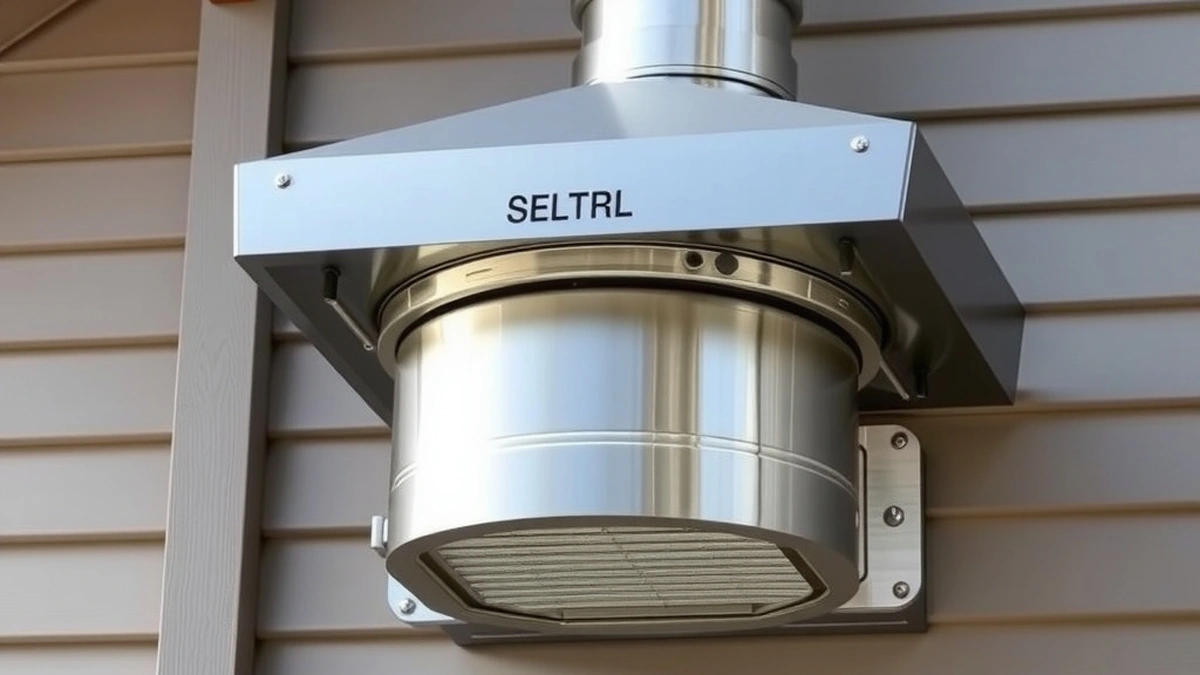
Gas fireplace venting follows the appliance category: a direct vent unit pulls outside air and exhausts through a sealed double-wall pipe, a natural draft unit uses a B-vent flue, and a power vent uses a fan. None of them can share a flue with a wood appliance.
- Liner, if reused
- $1,500 - $4,000
- Inspection first
- $150 - $800
- Cap or termination
- $150 - $600
- Typical install
- One day
Some links on this page are affiliate links.If you buy through them we may earn a commission at no extra cost to you. We do not accept payment for rankings. Read the full disclosure.
Gas fireplace venting is decided by the appliance, not by the chimney. A direct vent fireplace takes combustion air from outside and returns exhaust through a sealed double-wall pipe, so it does not use the chimney at all. A natural draft unit needs a properly sized vertical flue. A power vent unit adds a fan to push exhaust where a vertical run is impossible.
Getting the category wrong is the most expensive mistake in this trade, because the venting instructions are part of the listing. An appliance vented outside its listing is no longer a listed appliance.
The three systems
A gas fireplace venting system is the assembly that supplies combustion air and removes flue gases: the vent pipe, the termination, and any liner inside an existing chimney. The three categories differ in how they move air and where the termination goes.
Direct vent uses a coaxial pipe, with exhaust in the center and combustion air in the ring around it. It is sealed from the room, so it needs no chimney and no dilution air. B-vent is a double-wall metal flue that relies on the buoyancy of hot gas, with combustion air drawn from the room. Power vent uses a mechanical fan to overcome a long or horizontal run.
| System | Air supply | Typical termination | Fits an existing chimney |
|---|---|---|---|
| Direct vent | Outside, through the coaxial pipe | Horizontal wall or vertical roof | Only with a listed conversion |
| Natural draft (B-vent) | Room air | Vertical above the roof | Yes, with a liner |
| Power vent | Room air | Horizontal, fan-assisted | Rarely |
Reusing a masonry chimney
A masonry chimney can serve a gas fireplace, and the usual method is a liner. Aluminum is acceptable for some gas appliances, stainless for others, and the appliance manual names the approved material. The liner runs the full height, terminates at a cap, and the space around it is sealed at the top so the old flue does not act as a second path.
An unlined flue is not an option. Gas flue products contain water vapor and slight acidity, and a cold masonry flue condenses that moisture into the brick. Over a few seasons the mortar softens, the brick spalls, and the chimney starts to leak at the roof line rather than at the top.
Cost for the liner route is $1,500 to $4,000 installed, with an inspection at $150 to $800 first and a cap at $150 to $600. A direct vent through a wall is usually far cheaper because there is no flue at all, but it is only possible where the wall location works and the clearance to windows and intakes can be met.
Clearances are the hard part
Every vent termination has a listed clearance to operable windows, doors, air intakes, corners, decks, and grade. Those numbers come from the manufacturer’s instructions and the mechanical code, and they are not negotiable for convenience.
The practical effect is that a direct vent fireplace can be cheap to install in one wall location and impossible in the one the homeowner wanted. A termination under a window that opens, or beside a fresh-air intake, will fail inspection or pull exhaust back into the house. Measure before the framing goes up, not after.
The same logic applies at the top of a chimney. A vertical termination has to clear the roof by the height the listing requires, and a chimney that was built short for a wood fireplace may be too short for a gas appliance’s instructions.
Converting a wood fireplace to gas
Three questions decide whether the conversion is straightforward. Is the chimney sound? Is there room for a liner? And does the new appliance’s listing permit the vent configuration?
A sound chimney with a straight flue is the easy case: sweep at $150 to $400, inspect at $150 to $800, line at $1,500 to $4,000, cap at $150 to $600. A damaged crown or spalled brick has to be repaired first, at $400 to $1,500 for the crown and more if the stack needs rebuilding.
A chimney with no liner, offsets, or a flue too small for the appliance liner is the hard case. Sometimes an ovalized liner solves it. Sometimes the honest answer is a direct vent unit on an outside wall and the old chimney capped and left alone.
The installation sequence
- Read the rating plate and the venting section of the manual before buying anything.
- Inspect the chimney and measure the flue, including offsets and the height above the roof.
- Confirm the termination location against the listed clearances, on the wall or at the top.
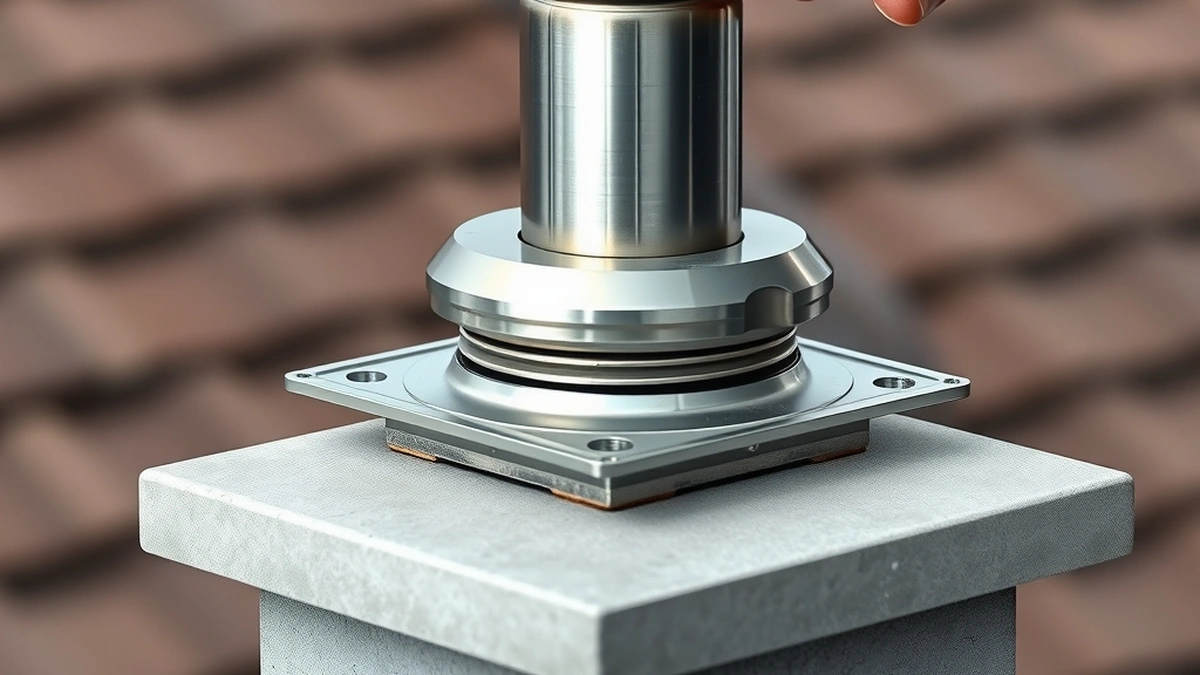
- Install the liner or vent pipe, sealed at the top plate and connected at the appliance collar.
- Cap the termination and seal every joint in the vent run.
- Test for draft and spillage with the appliance running, and check for gas leaks at every connection.
- Have the installation inspected if the local authority requires it, and keep the paperwork with the appliance.
The checks that matter after installation
A gas appliance is a combustion appliance, so the checks are about carbon monoxide and spillage rather than smoke. A natural draft unit should pull its flue gases up and out with no spillage at the draft hood. A direct vent unit should show no leakage at any joint, because the whole point of the sealed pipe is that the exhaust never enters the room.
A CO alarm on every level and outside the sleeping area is the backstop, not the test. The test is a combustion analyzer reading at the termination, done by the installer, with the numbers written on the invoice.
For the liner decision, see chimney liner cost and chimney liner for furnace. For the chimney repairs that come first, see fireplace chimney repair. For the annual check, see chimney maintenance.
Frequently asked questions
What kind of vent does a gas fireplace need?
It depends on the unit. Direct vent fireplaces use a sealed coaxial pipe through the wall or roof, natural draft units use a listed B-vent flue, and power vent units use a fan-assisted vent. The rating plate states which.
Can a gas fireplace vent into an existing chimney?
Yes, if the chimney is sound and the appliance is rated for it. The usual approach is an aluminum or stainless liner sized to the appliance, capped at the top, with the old flue sealed off.
Can gas and wood share one chimney flue?
No. A single flue serves one appliance class. Sharing a flue allows flue gases from one appliance to enter the other, and it is prohibited by the venting instructions for both.
Why does my gas fireplace smell when it runs?
New units burn off oils in the paint and metal during the first few hours, which is normal. A persistent smell after that usually points to a venting or combustion air problem and should be checked before the unit is used again.
Do gas fireplaces need a chimney cap?
Yes. A cap keeps rain, birds, and debris out of the flue, and on a natural draft unit it also stabilizes the termination. Expect $150 to $600 installed.
How much does it cost to vent a gas fireplace?
A short direct vent through a wall is often included in the appliance installation. Reusing a masonry chimney with a new liner runs $1,500 to $4,000, plus an inspection at $150 to $800.
Sources
Some links are affiliate links.If you buy through them we may earn a commission at no extra cost to you. We do not accept payment for rankings. Read the full disclosure.