Spalling brick: repair options for a chimney
Spalled chimney brick is replaced, not painted. Repair options run from single-unit replacement with repointing to a partial rebuild at $5,000-$15,000.
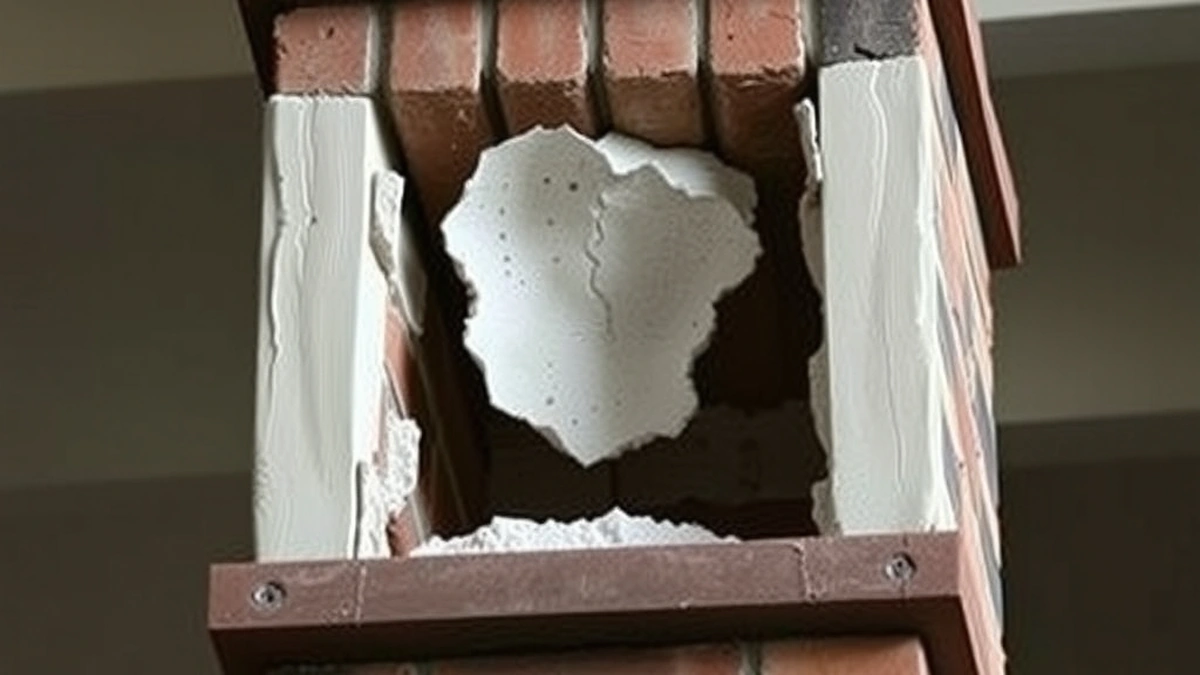
Spalling brick is repaired by replacing the failed units and repointing with matched mortar, after the water source is fixed. A crown at $400 to $1,500 or flashing at $400 to $1,500 comes first; a partial rebuild at $5,000 to $15,000 is the option when most of the stack has gone.
- Crown repair
- $400 - $1,500
- Flashing repair
- $400 - $1,500
- Repointing
- $400 - $1,500
- Partial rebuild
- $5,000 - $15,000
- Inspection
- $150 - $800
Some links on this page are affiliate links.If you buy through them we may earn a commission at no extra cost to you. We do not accept payment for rankings. Read the full disclosure.
Spalling brick has to be replaced, not covered. The face has come away because water inside the brick froze and expanded, and no coating restores that. The repair is new units set in matched mortar, done after the water source above is fixed — usually a crown at $400 to $1,500 or flashing at $400 to $1,500.
What spalling is
Spalling is the loss of a brick’s face, usually in flakes or sheets, exposing the softer body underneath.
It is not wear from weather on the surface. It is mechanical failure from inside: water enters the brick, freezes, expands by about nine percent, and pushes the face away.
The flake is the symptom. The water is the cause.
What causes it
Four routes put water into chimney brick.
A failed crown. Water enters at the top of the stack and travels down through the masonry.
Failed flashing. Water enters at the roof line and soaks the brick from the base up.
Eroded joints. Water enters through the mortar, which is meant to be the sacrificial layer, but only if it is intact.
Hard mortar from a previous repair. A cement-rich mortar stops the wall drying outward, so water exits through the brick face instead — which is why spalling often appears in a band beside fresh joints.
The fourth cause is the one that turns a repointing job into a rebuild.
Repair options
| Extent | Repair | Cost |
|---|---|---|
| A few units, sound joints | Replace units and repoint | $400 - $1,500 |
| Scattered units, eroded joints | Replace and repoint the section | $400 - $1,500 |
| Most of the exposed stack | Partial rebuild | $5,000 - $15,000 |
| Inner wythe crumbled | Rebuild, engineer review first | $5,000 - $15,000 |
| Surface only, brick sound | Leave it; fix the water | Crown or flashing cost |
The last row matters. Not every rough face is spalling. Efflorescence, mortar smears, and surface staining look similar from the ground and are not structural.
Worked totals
A chimney with a failed crown and three spalled units: crown $400 to $1,500 plus brick replacement and repointing $400 to $1,500, total $800 to $3,000.
A chimney with failed flashing and a band of spalling at the base of the stack: flashing $400 to $1,500 plus masonry repair $400 to $1,500, total $800 to $3,000.
A chimney with spalling across most of the exposed stack: partial rebuild at $5,000 to $15,000, plus a crown and cap if those are also replaced, so $5,550 to $17,100.
The step between the first two and the third is measured in how much of the stack has lost its face.
A useful rule of thumb from the trade: if you can cover the spalled area with one hand, it is a repair. If the flaking runs along a course or around a corner, it is a section. If it covers most of a face, price the rebuild before committing to patching.
Why the water comes first, and why paint fails
Replacing brick under a failed crown is a repair that undoes itself.
New units are set into the same wall that is still being soaked from above. Within a few winters, the replacements spall too, and the money is spent twice.
The order is: crown, flashing, cap, then masonry, then joints. That is the sequence in which water enters.
Our crown rebuild reviews page covers the top-of-stack repair, and flashing repair cost covers the roof line.
Why paint and sealant make it worse.
Two products are sold as fixes for spalling, and both fail.
Masonry paint forms a skin on the surface. Water that is already inside the brick cannot escape outward, so it concentrates at the paint edge and pushes off larger flakes.
Film-forming sealant does the same thing. A breathable water repellent is different: it lines the pores without closing them, so the wall can still dry. Even that is a preventive measure on sound brick, not a repair for a failed face.
When it is a rebuild
Three conditions move the job out of the repair band.
Most of the exposed stack has lost its face, so there is not enough sound brick to key new units into.
Corners or the top courses are missing, which means the bond is broken.
The inner wythe has crumbled, which is a structural issue and not a cosmetic one.
At that point the repair is a partial rebuild at $5,000 to $15,000, and an engineer’s review may be needed before any work starts.
The repair sequence
- Inspect at $150 to $800 and establish how much of the stack is affected.
- Fix the water paths: crown, flashing, cap.
- Remove the spalled units back to sound brick.
- Replace with units matched in size, colour, and absorption.
- Repoint with mortar softer than the brick.
- Re-inspect after the first winter.
Step 5 is the one that determines whether the repair lasts. Hard mortar on soft brick reproduces the original problem.
Step 6 is the one people skip. A repair that looks sound in October can show fresh flaking by March, and only a post-winter check tells you whether the water path was actually fixed or merely covered.
What is outside this scope
Spalling repair is masonry work. It does not cover the flue liner or the appliance connection.
Any inspection or repair of the flue, and any change to combustion-appliance venting, belongs with a qualified chimney technician. A chimney can have sound brick and a failed liner, or the reverse.
Our spalling brick cost page prices the options, and spalling brick prevention covers the routine that stops it recurring. For the signs, see spalling brick signs.
Frequently asked questions
Can spalled brick be repaired?
The damaged units have to be replaced. Filling or painting over a spalled face does not restore the brick, and it traps moisture that accelerates the next failure.
What causes brick faces to flake off?
Water inside the brick freezing and expanding. The water gets in through a failed crown, flashing, or joints, and the freeze-thaw cycle pushes the face off.
Is it cheaper to replace brick or rebuild the chimney?
Replacing a few units with repointing falls in the $400 to $1,500 band alongside crown and flashing repair. When most of the exposed stack has spalled, a partial rebuild at $5,000 to $15,000 is the realistic option.
Can I paint spalled brick?
No. Masonry paint traps moisture and makes spalling worse. It hides the symptom for a season and shortens the life of the remaining brick.
Does repointing stop spalling?
Only if the brick is still sound and the water source is fixed. Repointing over spalled brick bonds to a failing surface and the repair comes away with the face.
How do I know if the whole stack needs rebuilding?
When more than a small proportion of the units have lost their faces, when corners are missing, or when the inner wythe has crumbled. An inspection at $150 to $800 establishes the extent.
Sources
Some links are affiliate links.If you buy through them we may earn a commission at no extra cost to you. We do not accept payment for rankings. Read the full disclosure.