Cast-in-place liner reviews: what to trust
How to read cast-in-place liner reviews: which complaints repeat, how price claims compare with per-foot reality, and what reviews never verify.
Cast-in-place liner reviews reliably describe price surprises, cure-time surprises, and water problems at the top within two years. They rarely verify lining thickness, so treat the technical claims as unconfirmed and check the $100–$250 per foot range yourself.
- Per-foot pricing
- $100–$250
- 25 ft job total
- $2,500–$6,250
- Inspection first
- $150–$800
- Cap and crown
- $150–$1,500
Some links on this page are affiliate links.If you buy through them we may earn a commission at no extra cost to you. We do not accept payment for rankings. Read the full disclosure.
Cast-in-place liner reviews are useful for a narrow band of things and unreliable for the rest. They are good evidence about scheduling, mess, and whether the final invoice matched the estimate. They almost never confirm the lining thickness, the mix, or the cure schedule, which are the three variables that decide how long the pour lasts. Read them for pattern, then do the arithmetic on the $100–$250 per foot range yourself.
What a homeowner can actually review
A cast-in-place job is largely invisible. The work happens inside the chimney, the finished product is a grey bore, and the customer sees the top plate, the cap, the invoice, and the number of days the furnace was off.
That means reviews cluster around four observable things: how long the job took, how much it cost relative to the quote, whether the house was left clean, and whether anything went wrong in the following two heating seasons.
The claims that repeat
Across review sets for lining work, a handful of phrases recur often enough to be useful signals.
- “The price went up when they opened it.” Usually masonry damage found after the form was sized, and sometimes a scope that was written before the inspection.
- “We were without heat for four days.” Cure time was quoted as one day, reality was three.
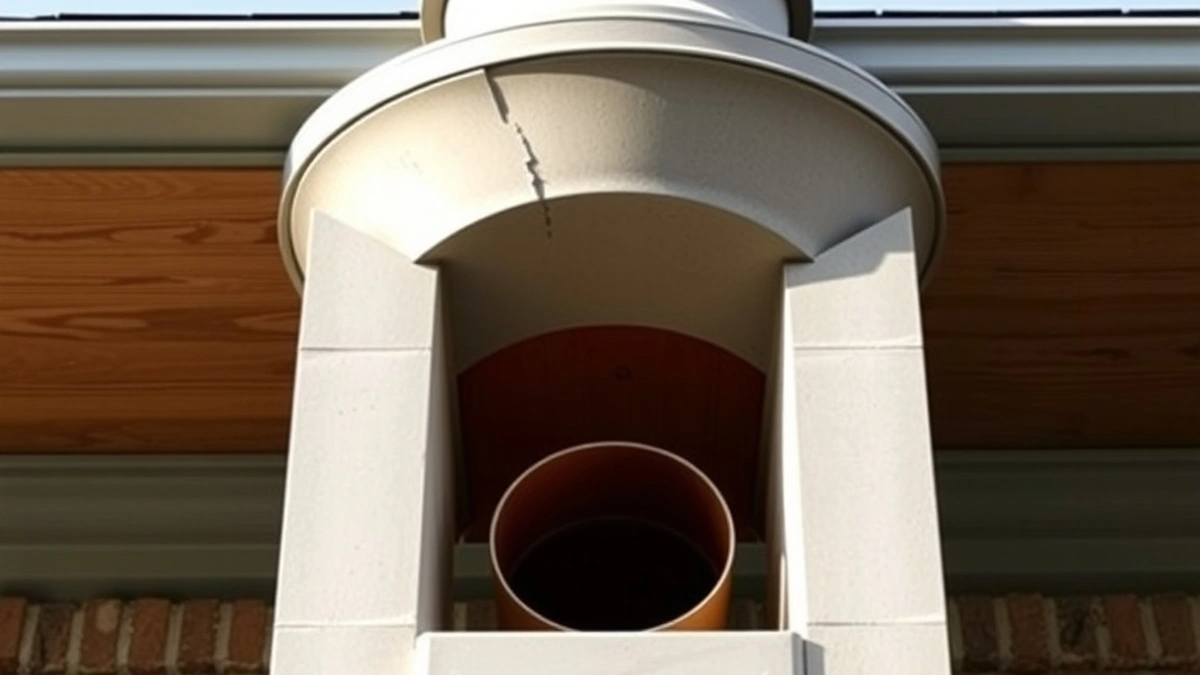
- “Water stains on the ceiling the next winter.” Crown or cap omitted from the scope.
- “Smoke comes out when we light the stove.” Flue narrowed below what the appliance needs.
- “They were in and out in a day and it was spotless.” Crew discipline, which is real but says nothing about the pour.
Each of these maps to a specific step in the process, which is why they are more useful than a star rating. A review that says “smoke comes out” tells you the sizing was wrong. A review that says “spotless” tells you nothing about sizing.
Price claims against per-foot reality
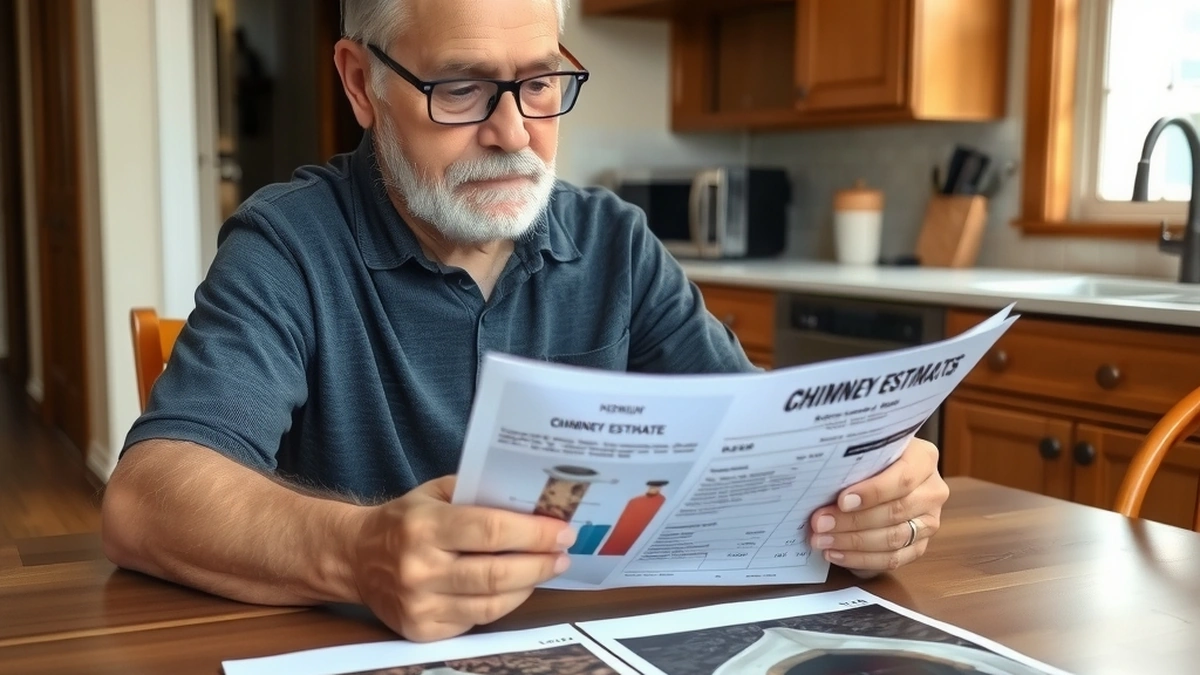
Most pricing complaints come from a mismatch between a phone estimate and the invoice. The installed range is $100–$250 per linear foot, which converts cleanly:
- 20 ft flue at $125 per ft: 20 × 125 = $2,500
- 25 ft flue at $175 per ft: 25 × 175 = $4,375
- 30 ft flue at $250 per ft: 30 × 250 = $7,500
- Two 20 ft flues at $150 per ft: 40 × 150 = $6,000
If a quote comes in at $80 per foot, something is missing. Usually it is the inspection at $150–$800, the crown at $400–$1,500, or the cap at $150–$600. Any of those appearing later as a change order is the exact scenario the one-star reviews describe.
| Review claim | What it maps to | Weight |
|---|---|---|
| “Bill matched the quote” | Scope was written before work | High |
| “Extra charge for the crown” | Crown was excluded from the original scope | High |
| “Heat off for four days” | Cure time was understated | Medium |
| “Lining flaking after two years” | Cleaning or mix problem | High |
| “Camera scan was included” | Closeout was documented | High |
| “Friendly crew” | Service quality, not technical quality | Low |
Where reviews and camera reports disagree
A five-star review written the week after installation cannot describe how a lining behaves through a freeze-thaw cycle. The failures that matter take two winters to show.
That is why the post-installation camera scan matters more than any review. Ask for the recording at closeout, keep it, and compare it to a fresh scan a year later. If the installer will not provide video, that tells you something the reviews will not.
The other gap is thickness. Reviews never mention it, because nobody measures it. Ask what thickness is specified in the contract and whether it meets the appliance listing.
Questions that separate companies
Ask each of these before booking and compare the answers side by side.
- What lining thickness will be installed, and what is the mix rated for?
- Is the crown included, and if not, what does a crown repair add?
- Is a cap included, and what type?
- How many days will the appliance be out of service, including cure?
- Who pulls the permit, and who meets the inspector?
- Will I receive the camera scan video at closeout?
- What does the labor warranty cover, and for how long?
A company that answers all seven in writing is not necessarily the cheapest, but it is the one whose reviews you can trust a year later.
A fair reading of a review set
- Read the newest twenty reviews, not the highest rated.
- Search for the words “crown,” “cap,” “cure,” and “draft.”
- Note whether critical reviews get specific replies with dates and remedies.
- Discount reviews that describe work clearly done on a different system, such as spray-on coatings.
- Weight reviews that mention a camera scan, because that reviewer saw the closeout.
- Cross-check the price mentioned against the per-foot range before treating it as evidence.
For the cost structure behind those numbers, see cast-in-place liner cost. For the failure modes that reviews describe vaguely, cast-in-place liner problems names each one. If you are weighing a metal liner instead, stainless relining reviews covers the parallel evidence for that category, and cast-in-place liner vs stainless relining lays out the trade-off in one table.
Frequently asked questions
Are cast-in-place liner reviews reliable?
For scheduling, cleanup, and whether the bill matched the quote, yes. For lining thickness, mix design, or cure schedule, no, because a homeowner cannot see any of those from the driveway.
What do negative cast-in-place reviews complain about?
Most often a longer downtime than promised, water entering at the top within a couple of years, and draft problems after the flue was narrowed. Each points to a specific step in the installation.
How much does a cast-in-place liner job cost?
Plan on $100–$250 per linear foot installed. A 25-foot flue works out to $2,500–$6,250, which is generally above a stainless reline at $1,500–$4,000.
Do reviews mention whether the crown was repaired?
Rarely. That is the gap worth closing in your own quote, because a new lining under a cracked crown is a lining that will fail. Crown repair runs $400–$1,500.
What warranty do cast lining companies offer?
Manufacturer warranties on the lining material are typically long, often decades. The installer's labor warranty is usually much shorter, sometimes one to five years, and that is the one that covers a bad pour.
How can I verify a company before booking?
Check the state contractor license, ask for the lining manufacturer's approved-installer list, confirm liability coverage, and ask for the address of two local jobs you can look at.
Sources
Some links are affiliate links.If you buy through them we may earn a commission at no extra cost to you. We do not accept payment for rankings. Read the full disclosure.