Downdraft and smoke: what a fix costs
Downdraft and smoke: what a fix costs: practical numbers, costs, and trade-offs, written independently.
Downdraft and smoke: what a fix costs: practical numbers, costs, and trade-offs, written independently. The guide below shows the numbers and the trade-offs.
- Typical range
- Varies by system and site
- First step
- Measure the space and confirm the load
- Professional help
- Recommended for structural or electrical work
Some links on this page are affiliate links.If you buy through them we may earn a commission at no extra cost to you. We do not accept payment for rankings. Read the full disclosure.
Smoke coming back into the room costs $150 to $800 to diagnose and $150 to $4,000 to fix, because a downdraft is a symptom with several causes and the price follows the cause. A missing cap sits at the bottom of that range. A liner sized to the appliance, or a rebuild that restores flue height, sits at the top. The symptom tells you nothing about the price; the inspection does.
What a downdraft is
A downdraft is a reversal of normal chimney flow in which air moves down the flue and pushes smoke into the room instead of exhausting it above the roof.
Normal operation depends on the flue being warmer than the outside air and on the house having enough air to replace what the fire consumes. Break either condition and the flue stops pulling. A cold flue on a mild day, a bathroom fan running in a tight house, and a cap that catches crosswind all produce the same result at the firebox: smoke at the wrong end of the chimney.
The causes, cheapest first
| Cause | What it looks like | Usual fix | Typical cost |
|---|---|---|---|
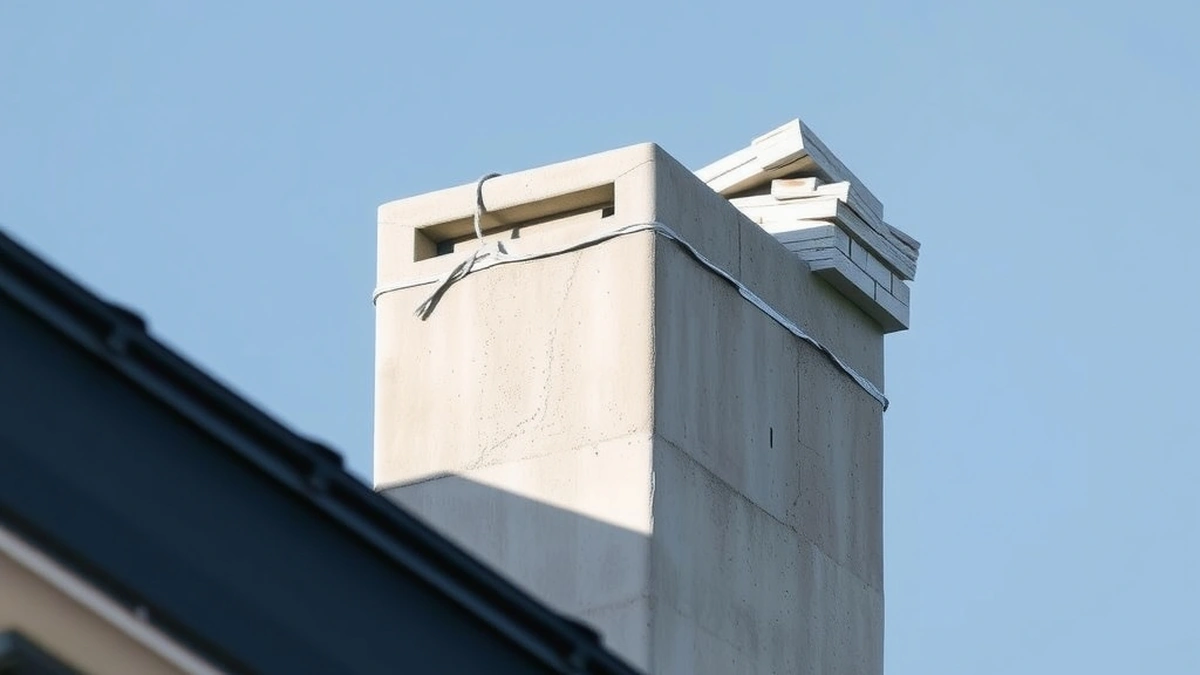
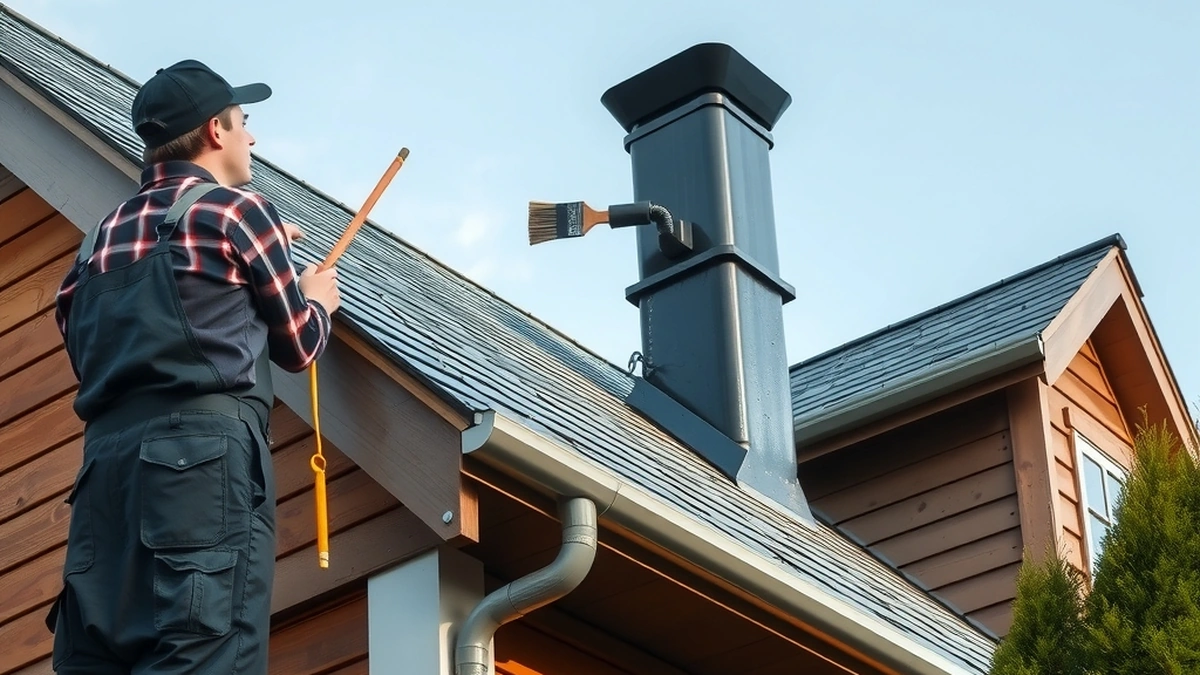
| Missing or open cap | Rain and downdraft in windy weather | Cap with mesh and wind guard | $150–$600 |
| Blockage | Smoke everywhere, weak fire | Sweep and inspection | $150–$800 |
| Negative house pressure | Smoke only when fans run | Makeup air, cracked window test | Low to moderate |
| Flue oversized for the appliance | Poor draft, creosote, smoky starts | Correctly sized liner | $1,500–$4,000 |
| Flue too short or badly terminated | Smoke in certain wind directions | Extend or re-terminate | Varies with the roof |
| Masonry failure | Smoke plus water damage | Repair or partial rebuild | $400–$15,000 |
The order matters because the first three are cheap and the last three are not. A $375 cap that solves a wind problem is a better buy than a $2,750 liner that solves nothing.
What each fix costs, with arithmetic
The planning figures are a sweep at $150 to $400, an inspection at $150 to $800, a cap at $150 to $600, crown repair at $400 to $1,500, a stainless liner at $1,500 to $4,000, and a partial rebuild at $5,000 to $15,000.
Start with the diagnosis. The inspection midpoint is ($150 + $800) ÷ 2 = $475. A cap at the midpoint is ($150 + $600) ÷ 2 = $375. Cap plus inspection is $375 + $475 = $850.
If the inspection finds the flue is the problem, the liner midpoint is ($1,500 + $4,000) ÷ 2 = $2,750, and the job becomes $850 + $2,750 = $3,600. If the masonry has failed, the rebuild midpoint is ($5,000 + $15,000) ÷ 2 = $10,000, and the total is $850 + $10,000 = $10,850.
Flue size vs flue height: which one is your problem
Flue size is about velocity. A flue that is too large for the appliance lets the gases cool before they reach the top, and cool gas is slow gas. A six-inch stove collar has a cross-section of about 28.3 square inches. An eight-by-eight clay tile has 64 square inches inside. The tile is 64 ÷ 28.3 = 2.3 times the area the appliance was designed for, so the gases expand, slow down, and deposit creosote on the way out.
Flue height is about stack effect. A taller flue produces more pull because the column of warm gas is longer. A short flue on a low roof, or one that terminates below a nearby ridge or tree, loses to the wind regardless of how well it is sized.
The test separates them. If the chimney smokes on still days and at cold starts, suspect size. If it smokes in wind, at particular directions, or when the house is closed up, suspect height, termination, or pressure.
The cause nobody prices
A modern house is tight, and every exhaust fan in it competes for the same air. A range hood, a bathroom fan, and a dryer running together can depressurize a house enough to reverse a chimney that is otherwise fine. The symptom is smoke that appears only when something else runs.
Crack a window near the appliance and light a fire. If the smoke stops spilling, the chimney is not the problem; the house is starved for makeup air. The fix is a source of outside air for the appliance or the room, which is a mechanical ventilation question and not a chimney repair.
This is worth checking before authorising work, because a liner will not fix a pressure problem. The pattern is a $2,750 liner, a $600 cap, and still a smoky room, because nobody tested the window.
What a smoke fix does not include
A cap, a liner, and a rebuild all address the chimney. None of them address the appliance, the fuel, or the way the fire is lit.
Wet wood, a firebox that is too small for the opening, and a damper left partly closed all produce smoke that looks like a downdraft. So does a flue that is blocked by a nest or a creosote ledge.
Anything involving the venting of a gas, oil, or solid-fuel appliance should be assessed and signed off by a qualified technician. Carbon monoxide is the reason. A flue that reverses under the wrong conditions can spill combustion products into the room without any visible smoke, and that is not a symptom a homeowner can diagnose by smell.
How to diagnose it in order
- Note when the smoke appears: cold starts, windy days, or when fans run. The pattern narrows the cause before anyone climbs the roof.
- Crack a window near the appliance and repeat the test. If the smoke stops, the problem is house pressure.
- Book a sweep and inspection, and ask for the flue size in inches and the appliance’s flue collar size.
- Have the technician check the cap, the termination height, and the flue for blockages and creosote.
- Compare the flue area to the collar area, and compare the termination to the roofline and nearby trees.
- Repair the cause the inspection found, then retest under the same conditions that produced the smoke.
When to stop repairing
A chimney that has been patched three times for smoke is usually a chimney with a fundamental sizing or height problem, and the fourth patch is money spent on the same defect. At that point the honest options are a correctly sized liner, a re-termination, or a rebuild.
If the diagnosis points to a liner, the planning number is $1,500 to $4,000. If it points to masonry, it is $5,000 to $15,000. Spending $850 on diagnosis and a cap to avoid a $10,000 rebuild is sensible; spending $3,600 on a liner to avoid diagnosing a pressure problem is not.
For the repair side of this, see downdraft and smoke repair. For cap options, see chimney cap installation. For liner sizing, see chimney liner cost, and for what the inspection should cover, see chimney inspection cost.
Frequently asked questions
What is the most important measurement?
Start with the ceiling or clearance number; it decides which systems can fit.
What does a typical project cost?
Costs vary by system and site access; the guide shows the line items and a planning range.
Can I install this myself?
Some tasks are DIY-friendly, but structural, electrical, and load-bearing work should be done by a licensed professional.
How long does installation take?
A simple setup is a weekend; a full build with electrical or structural work can take several weeks.
What should I check before buying?
Confirm dimensions, load ratings, and the manufacturer's installation requirements for your exact model.
Where can I find local help?
Ask a licensed contractor or installer who has worked with the same system and can inspect your site.
Sources
Some links are affiliate links.If you buy through them we may earn a commission at no extra cost to you. We do not accept payment for rankings. Read the full disclosure.